



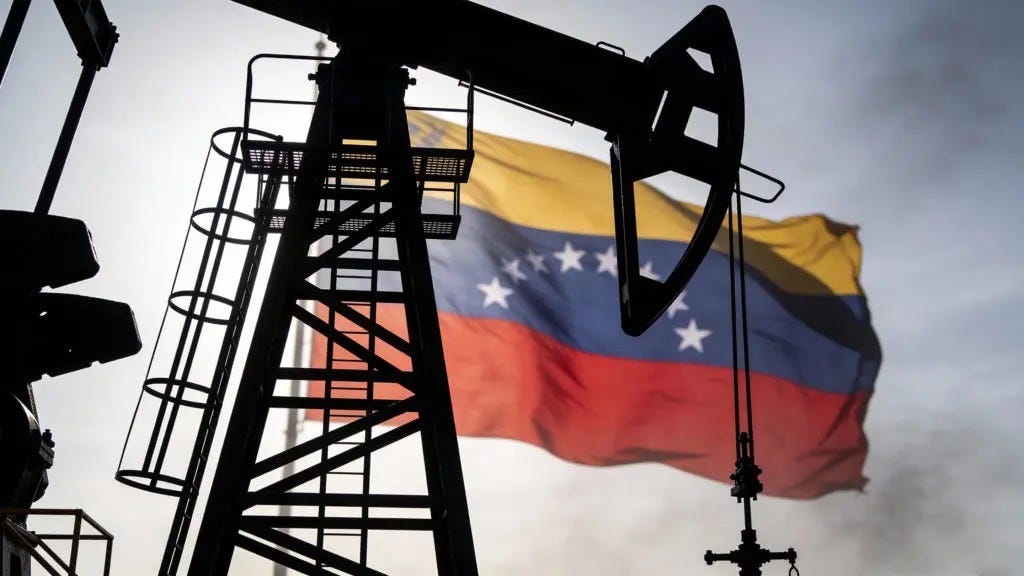
In early January 2026, the United States conducted a military operation in Venezuela that resulted in the capture of Nicolás Maduro along with his wife. While the official announcement stated that the operation was aimed at charging them with drug trafficking and narcoterrorism, recent policies such as easing sanctions to allow U.S. companies to operate in Venezuela’s oil sector suggest that the operation has a broader economic objective: seizing control over Venezuela’s oil industry. The operation may boost the appeal of oil imported from Venezuela and is often seen as a threat to competitors, such as Canadian oil producers, who compete with Venezuelan producers in U.S. Gulf Coast refineries. However, its actual impact is limited and overstated as Venezuela’s ability to expand exports is constrained by geopolitical instability and long-term structural challenges, including underinvestment in infrastructure, particularly in transportation, and the shortage of skilled labor in the oil industry.
The perception that Venezuelan oil will emerge as a major threat to Canadian oil production overlooks the substantial barriers that prevent Venezuela from increasing production in the near term. The major claim is that, while Venezuelan oil is typically priced slightly higher, investment in Venezuelan infrastructure, especially in transportation, will significantly lower its price. However, the Venezuelan oil industry has experienced decades of underinvestment, leaving much of its infrastructure, such as transportation networks and pipelines, unrepaired. While current policy may open up investment opportunities to repair aging infrastructure, it requires long-term effort and ongoing maintenance and operational investments.
In recent years, Canada has been the largest oil supplier to the United States, accounting for over 60% of U.S. Gulf Coast oil imports. The U.S.’s intervention in Venezuela could improve the reliability of Venezuelan supply, increase oil production through investments in infrastructure and pipelines, and lower export costs for Venezuelan heavy crude. However, it is unlikely to significantly threaten Canada’s dominant role as an oil exporter to the United States. Venezuela’s impact on Canadian oil producers is exaggerated because, although both countries produce heavy oil, there is a significant difference in their conversion rates to light and usable crude oil.
The distinction between oil properties is better understood through industrial metrics of crude oil, such as API gravity and sulfur content, which directly affect transportation and refining, helping to explain why Venezuelan oil cannot fully replace Canadian crude. The Orinoco Belt, which contains the majority of Venezuela’s reserves, is dominated by crude oil with an API gravity of around 10 and a sour content of around 5%. Therefore, the majority of Venezuela’s oil is heavy crude, with a high density (Merey 16, which accounts for most of Venezuela’s oil exports, has an API gravity of 16) and a high viscosity, with a texture similar to cold honey. Compared to lower-viscosity, lower-density oil, which can be processed through straightforward distillation, high-density, high-viscosity oil requires a more complex treatment. Before it can be transported through the pipelines, it must be diluted by mixing with light oil and further upgraded using high-pressure, high-temperature coking machines to break down large hydrocarbon molecules into smaller fractions. In addition to its high density and viscosity, Venezuela lacks a stable supply of diluent, such as naphtha, which is necessary to make heavy oil transportable, further constraining the transportation of Venezuelan oil. At the same time, due to poor maintenance of extraction facilities, Venezuelan oil is at greater risk of contamination, reducing its competitiveness relative to established Canadian exports.
Canadian oil, especially that from Alberta, is also often considered heavy oil. For example, the most common oil produced in Canada, Athabasca Bitumen, has an API gravity below 10, meaning it will sink in water and barely flow at room temperature. However, Canadian oil has an 80-90% conversion rate to light, sweet synthetic crude oil, making it more favorable to refineries in the countries to which it is exported. Additionally, refineries on the United States Gulf Coast that can convert residue often prefer diluted bitumen over upgraded heavy oil because they require heavier crude inputs to balance the growing supply of extra-light domestic shale oil.
Moreover, although some argue that despite all the constraints, Venezuela’s oil productivity could be strengthened by U.S. investment, and will eventually circle back into benefits for the U.S. in the long-term, the cost of repair exceeds $100 billion over the next 15 years. Additionally, restoration not only requires investor capital but also a large, experienced workforce. The outflow of talent in the Venezuelan oil sector over the past 10 years, due to the aftermath of PDVSA’s worker strike, creates additional barriers to restoration.
In conclusion, U.S. involvement in Venezuela has a limited impact on Canadian oil production markets, especially over the next 5-10 years, given the need to significantly reestablish investments and train a new skilled workforce. However, in the long-term, it’s also unlikely for Venezuela to replace Canadian oil because of differences in oil properties.

Iris Li is a student at Columbia University (CC ’28) studying Applied Mathematics and Financial Economics. She is interested in investment banking and private equity, especially the technology and healthcare divisions. In her free time, she likes practicing golf at the Chelsea Piers, seeing operas, and trying new restaurants in NYC.