


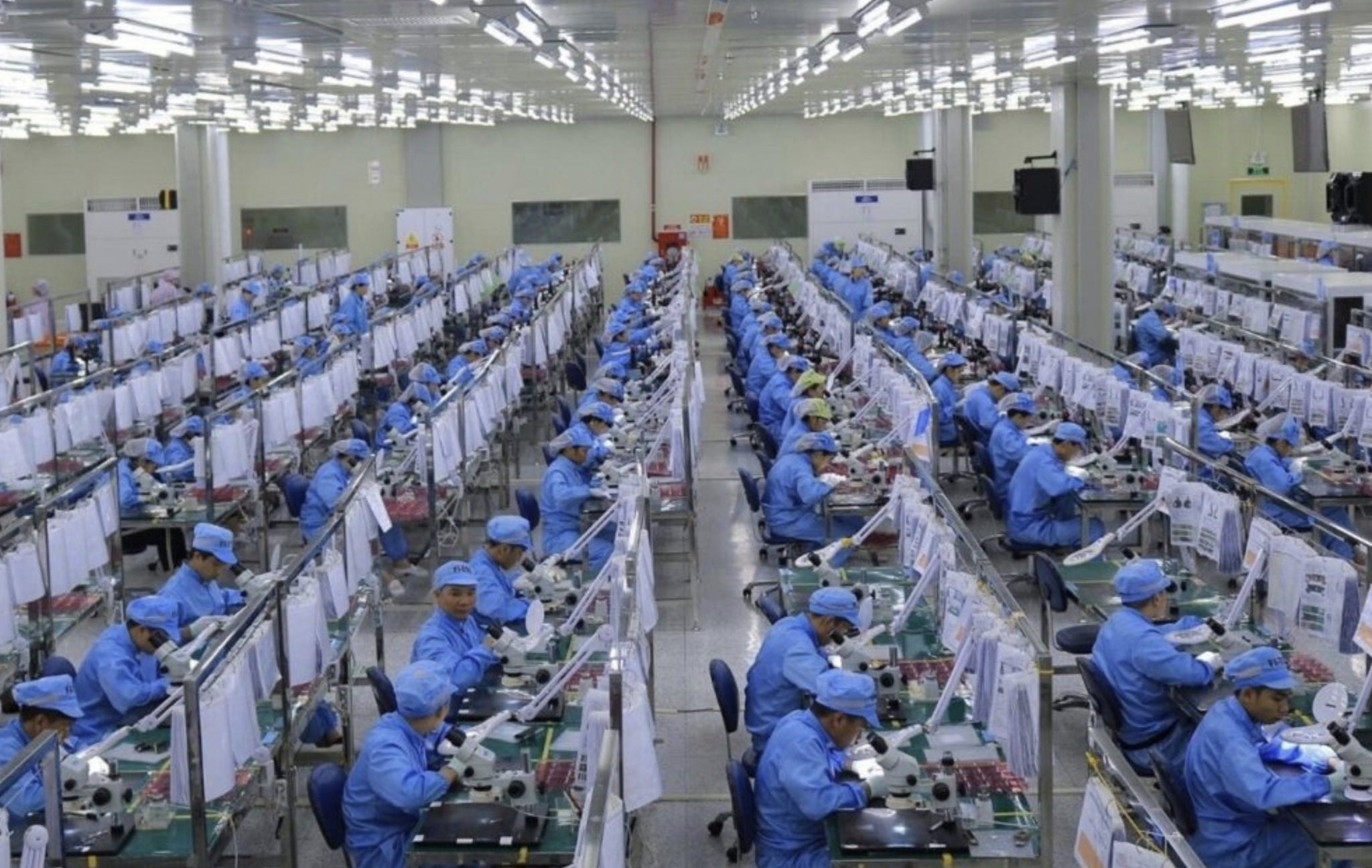
In 2024, Samsung’s factories in Vietnam generated $62.5 billion in revenue. This was roughly one-sixth of the country’s entire GDP, yet the profits flowed back to Seoul rather than Hanoi. This single statistic captures the central paradox of Vietnam’s economic miracle: a country that has industrialized at remarkable speed while remaining structurally dependent on foreign capital to do so. Vietnam’s foreign investment-led growth model has been transformative, but it has also created a dependency that threatens the country’s long-term development. To escape it, Vietnam must reform its tax incentive system to level the playing field for domestic firms and enforce stronger domestic sourcing requirements on foreign investors. Most importantly, it must direct public revenue into building the homegrown industrial base that foreign firms have never been required to create.
Vietnam’s openness to foreign investment was not inevitable. It was a conscious political decision born from crisis. By 1986, the country was on the brink of economic collapse. Inflation had exceeded 700 percent and food shortages were widespread. The centrally planned model borrowed from the Soviet Union had proven unworkable. The ruling party responded with the Doi Moi, or ‘renovation,’ reforms. This abandoned central planning in favor of a market-oriented economy and actively courting foreign capital through the Foreign Investment Law of 1987, which even allowed 100 percent foreign ownership. The logic was pragmatic. Vietnam had no domestic private sector to speak of and no accumulated capital or manufacturing base. Foreign firms offered all three.
The strategy worked impressively in its own terms. By the end of 2024, Vietnam had attracted $502.8 billion in total registered FDI, with a record $25.35 billion disbursed in that year alone. Samsung and Intel built major production facilities in northern provinces, joined by Apple suppliers such as Foxconn and Pegatron. Electronics now account for over 30 percent of Vietnam’s total exports, worth more than $72.6 billion in 2024. The country went from near-collapse to middle-income status within a generation.
The problem is that Vietnam largely built someone else’s economy. The World Bank’s 2024 report found that foreign firms account for 73 percent of Vietnam’s total exports, while domestic firms’ participation in global supply chains fell from 35 percent in 2009 to just 18 percent in 2023. The report concluded that Vietnam captures only a fraction of the value embedded in the goods it exports. When a Samsung phone leaves a factory in Thai Nguyen, the design was done in Seoul and the key components were sourced from South Korean and Taiwanese suppliers. The profit returned to Samsung shareholders. Vietnam supplies the labor; its local companies capture little of the value.
This is not simply a matter of bad luck. Research Policy found that productivity spillovers from foreign firms to Vietnamese domestic suppliers are indirect and limited. For instance, Samsung sources most of its inputs from non-domestic suppliers, creating weak linkages to the local industrial base. The root cause is that Vietnam encouraged foreign investors before it had built a domestic private sector capable of participating alongside them. As a result, the two economies now operate largely in parallel.
Part of what sustains this two-track economy is the tax system Vietnam built to attract FDI in the first place. Foreign investors receive corporate income tax holidays: zero tax for four years, then a 50 percent reduced rate for nine more years. In comparison, domestic firms face the standard 20 percent rate far sooner. This asymmetry was rational when Vietnam had nothing to offer but cheap labor and tax breaks. Today it means foreign firms remain structurally more competitive because the Vietnamese state subsidizes them at the expense of local rivals. The stakeholders who benefit most from this arrangement are multinational corporations and provincial governments that compete for their investment that have little incentive to change it.
Geopolitical exposure makes the stakes concrete. Vietnam exports nearly 30 percent of its goods to the United States and relies heavily on Chinese intermediate inputs for its manufacturing sector. When the U.S. initially imposed a 46 percent tariff on Vietnamese goods in early 2025, economists at OCBC Bank estimated it could shave 1.2 percentage points off GDP growth, while Bloomberg projected Vietnam could lose 25 percent of its U.S. exports in the long term. The tariff was eventually negotiated down to 20 percent, but the episode showed exactly how little control Hanoi has over the conditions of its own growth. An economy whose export fortunes hinge on decisions made in Washington and Beijing is not yet a fully autonomous one.
Vietnam is not without options, and the government has shown it understands the problem. The National Semiconductor Strategy sets out an ambitious plan to build a domestic chip design ecosystem, targeting at least 100 homegrown chip design firms and 50,000 trained semiconductor engineers by 2030. This is a meaningful shift in ambition from assembly toward ownership. But strategy documents are not enough.
Fixing this requires structural reforms to Vietnam’s fiscal and regulatory environment. Vietnam should progressively phase out preferential tax treatment for foreign firms while simultaneously cutting domestic firms’ compliance burdens and improving access to financing. It should tie future FDI licensing to binding domestic sourcing commitments, requiring multinationals to source a rising share of inputs from Vietnamese suppliers over time. It should also use the revenues from FDI activity, which are real even if the profits leave the country, to fund the vocational training and R&D infrastructure that domestic firms currently lack. South Korea and Taiwan followed comparable paths: they welcomed foreign capital and extracted knowledge from it while building domestic champions alongside it. Vietnam is at a similar crossroads today.
Vietnam’s development story since Doi Moi is one of the most remarkable in modern history. But the next chapter cannot be written by Samsung. Thirty-eight years after the ruling party chose to open Vietnam to the world out of necessity, the country now has the leverage to renegotiate the terms of that openness. The question is whether it will use it. Growth that cannot be owned is growth that cannot be sustained. Vietnam has spent nearly four decades building someone else’s factory. It is time to start building its own.

Rohan is a sophomore majoring in Financial Economics with interests spanning technology and the interaction between people and markets. Having lived across multiple countries, he brings a strong cross-cultural perspective and enjoys connecting diverse communities. He is particularly interested in emerging ideas and understanding how industries evolve over time.