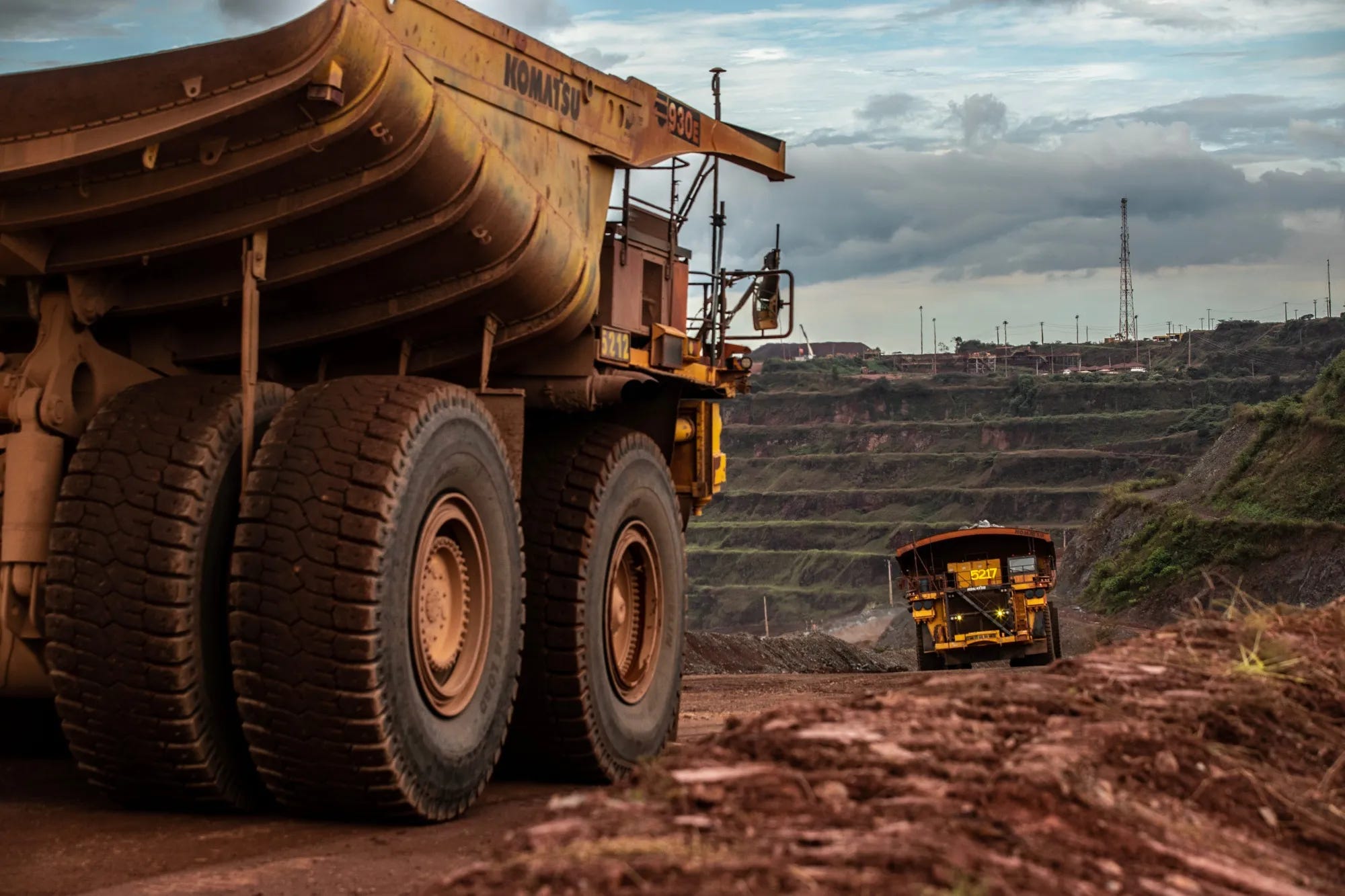
The era of oil money is coming to an end: global oil consumption is expected to peak between 2029 and 2032, after which renewable and nuclear sources are predicted to dominate. Despite this, oil revenue continues to represent 22% of Saudi Arabia’s GDP and 55% of its government budget. To prepare itself for the future, Saudi Arabia has to diversify its economy into sectors with long-term demand. Mining—particularly for rare earth elements (REEs) and copper—presents a compelling opportunity for the Kingdom, especially in light of a worldwide mineral deficit resulting from low capital expenditures. Copper is expected to face a 25% by 2040, with AI infrastructure expected to increase copper demand by 50%. Saudi Arabia’s non-fuel mineral endowment is valued at approximately $2.5 trillion, giving it the potential to become a major global supplier and meet global deficits. However, to realize this potential, Saudi Arabia must urgently direct more capital towards mineral exploration, develop the vital rail, power, and water infrastructure for mining, and expand domestic processing capacity to capture the full value chain.
REEs are currently dominated by China, which controls 59% of global REE mining and 90% of processing. China has already utilized its dominance over global mining supply chains to apply pressure: in April 2025, it restricted REE exports in retaliation for US tariffs, generating widespread supply disruptions and price volatility. This geopolitical risk has created a strategic opening for new producers of REEs—one that Saudi Arabia is well-positioned to fill as an alternative supplier. Saudi Arabia has already made concerted efforts to develop its mining industry through its sustainability-focused Vision 2030 program, which classifies mining as a new pillar of the national economy. Recent deposit findings of copper and REEs suggest immense potential for Saudi Arabia’s mining industry. In the northwest, the Ghurayyah REE project contains roughly 385 million tonnes of ore, making it one of the largest REE deposits in the world. The Kingdom has upped its estimate of its mineral reserves by 90% since 2016, which is likely still conservative as much of the country remains geologically unexplored.
Saudi Arabia has several tailwinds to aid its nascent mining industry. First, the Kingdom’s shifting legal and regulatory landscape under Vision 2030 has enabled easier foreign investment in local mines. In 2021, the government legalized 100% foreign ownership of mining projects, where ownership was previously capped at 49%. This sweeping legislation included elements like copper, uranium, and various REEs. Additionally, in a more recent reform, the tax rate for mining projects was reduced from 45% to 20%, allowing foreign investors to retain greater control and profit over their projects. Furthermore, the acceleration of approval processes significantly derisks investment—mining licenses can now be obtained within 180 days through digital licensing systems. In comparison, the average time to bring a mining project online in North America is 30 years, primarily due to permitting challenges.
To help its mining industry reach its full potential, Saudi Arabia must overcome some key challenges.
Mining requires high-risk exploration projects that do not always guarantee a return. Most recent figures in 2025 estimate Saudi Arabia’s exploration spending at $280 million, a far cry below the expenditures of developed mining economies such as Canada, which spend billions on exploration annually. What makes this gap striking is where capital has been committed. Saudi Arabia has made multibillion dollar investments in other industries, including AI, tourism, and sports. The Public Investment Fund (PIF) has invested over $5 billion into LIV Golf, which generated a loss of $1 billion in 2024 alone and from which the PIF is preparing to exit. Saudi Arabia’s Project Transcendence is planning to invest as much as $100 billion into AI. Inherently, that is not unreasonable; however, it is a high-conviction bet on an industry that has yet to produce clear winners. The dot-com era serves as a useful reminder that even the most transformative technologies do not result in proportionate returns and that the dominant players in a new technological era are rarely known at the beginning.
Mining offers a different risk profile. The demand for minerals is driven by infrastructure, electrification, and other industrial processes that must purchase necessary minerals. Mining has also featured as an announced investment with $110 billion to be spent by the state-owned mining corporation Ma’aden. However, this plan is conditional and depends on the economic viability of projects, unlike the other industries, where capital is already committed. This suggests that mining may offer more predictable, cash-generating returns than some higher-valuation, long-term investments and may warrant a greater share of long term capital allocation.
The Kingdom must also aggressively scale infrastructure, particularly its rail network, power generation, and available water. Currently, there is no major rail line that connects mining sites, meaning that mines are scattered and remote, making it difficult to transport any ore. Even if they are not connected, mines require stable, high-voltage electricity and water to operate. Saudi Arabia operates around 33 dual-purpose power and desalination plants that supply water to the country. These plants are located on the coastline, as they use seawater for cooling and supply. However, most mineral deposits are inland, meaning that supplying the mines with electricity and water will require major extension of the grid and water infrastructure.
Moreover, Saudi Arabia needs to be much more aggressive with its processing and refining capacity. As with its integrated oil industry, significantly more value is captured through refining, smelting, and processing than resource extraction alone. For example, in 2024, Aramco’s downstream business consumed 53% of its upstream production, meaning that most of Saudi oil was domestically refined. Current mineral refining and processing capacity is insufficient for the pipeline of planned mining projects, and minerals continue to be exported from Saudi Arabia for processing elsewhere. Constructing midstream processing must be done with urgency to capture the whole value chain and prevent any interim bottlenecks.
Furthermore, mining is a highly specialized industry that requires technical knowledge. Ma’aden itself admits that its biggest challenge is “people” and places a big emphasis on talent attraction. This is somewhat less of a limitation than the previously mentioned factors, as Saudi Arabia’s low tax environment coupled with high salaries for expatriates is globally competitive. However, the recent deterioration of stability in the Middle East may stump talent attraction and investors alike, especially since large infrastructure is often the target of drone strikes.
Saudi Arabia’s plentiful mineral endowment alone is not sufficient for it to become a major global supplier of minerals. As the demand for copper and REEs accelerates, the Kingdom has a narrow window to establish itself as a leader in the global mineral supply. In order to do this, it must move with the same urgency that it has brought to AI, sports, and tourism. This means investing more capital into mining and its surrounding ecosystem. The first ingredients that must be added are the infrastructure for mining: rail, power, and electricity. Once this has been achieved, the Kingdom must develop its processing ability, as it has done so successfully in its oil industry, to fully capture the value chain. The $2.5 trillion is in the ground: the question is whether Saudi Arabia can develop the necessary infrastructure and processing ability to claim it.
Joseph Berbner (CC ‘27) is a writer at CEMR studying Mechanical Engineering. His interests include natural resources and large-scale infrastructure. With the energy transition accelerating the demand for critical minerals, he is drawn to the policy, economics, and geopolitics of extractive industries. Additionally, he is interested in engineering and technological innovation that sits at the intersection of robotics and artificial intelligence - two fields that he believes will shape resource demand and industrial systems.
Thanks for reading The Columbia Emerging Markets Review! This post is public so feel free to share it.