



The South African Power Pool is an inter-governmental collection of Southern African countries, created in 1995, designed to coordinate the planning and operation of member-nations’ electric systems. SAPP facilitates cross-border electricity exchange and infrastructure development, and has been particularly advantageous for its less developed members, supporting energy security and trading reliability, amongst other benefits. Among the members of the SAPP, lie two strategic trading partners: Zimbabwe and Mozambique. Although the two countries are well-integrated, Mozambique’s faster modernization and diversification increasingly strain the partnership, where Zimbabwe––which relies heavily on Mozambican electricity imports––ultimately stands to be the biggest loser..
Through its state-owned power company, Zimbabwe Electricity Supply Authority (ZESA), Zimbabwe is deeply dependent on Mozambique for energy imports. In 2024, Zimbabwe imported 39% of its electricity from Mozambique through various energy plants and dams. Yet, Zimbabwe has been incredibly inconsistent in making payments to Mozambique. Over the years, Mozambique’s State Energy Company, Electricidade de Moçambique (EDM), and the Hydroelectrica Cahora Bassa (HCB), of which the Mozambique government holds a majority stake, have made numerous warnings in response to Zimbabwe’s accumulation of debt in relation to payments. In 2009, Reuters reported that the EDM and the Hydroelectrica Cahora Bassa, threatened to cut or reduce electrical exports to Zimbabwe over its debts of $5.3 million to EDM and $40.3 million to HCB. In 2017, Reuters reported that Zimbabwe’s grid experienced power cuts, with regional suppliers noting Zimbabwe’s outstanding debt as the cause of these cuts. In total, Zimbabwe is reported to owe $102.9 million to regional power suppliers as of June 2023. The country noted in its 2022 Annual Debt Bulletin $18.73 million in debt to EDM, and $74.92 million to HCB, highlighting a deeply troubling and recurring pattern. Zimbabwe’s deep dependence on Mozambique, persistent debt and continued payment failures strain their partnership––leaving Zimbabwe particularly vulnerable.
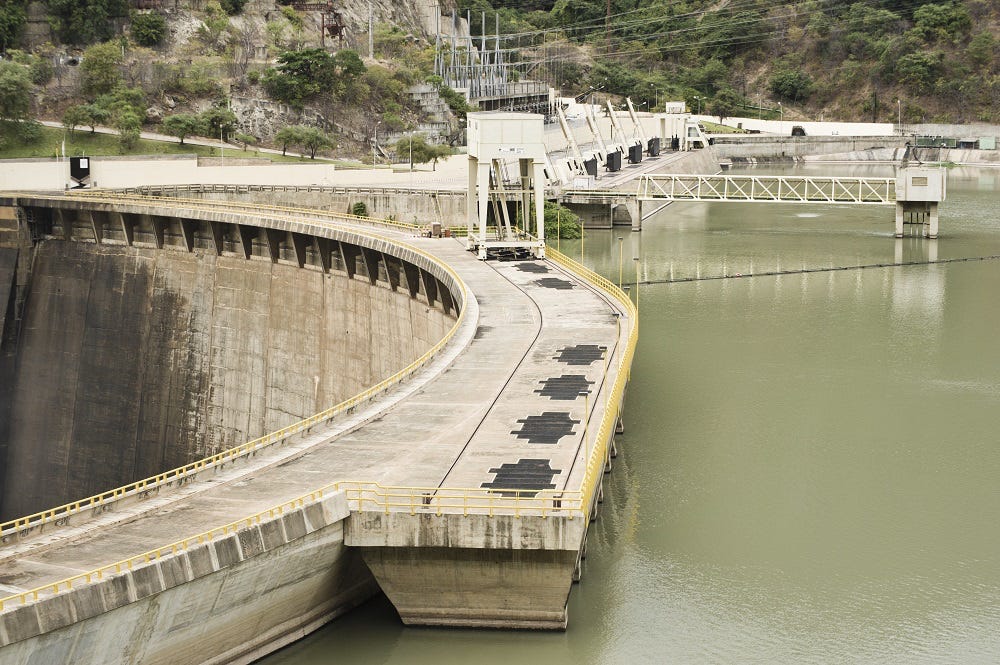
Mozambique has established itself as an influential player within the South African Power Pool (SAPP), continuing to progress and improve its domestic production capacity. As a net exporter of energy, Mozambique supplies other countries with electricity such as South Africa, which receives 65% of the energy generated from the Hydroelectrica Cahora Bassa. Furthermore, unlike many of its neighbors, Mozambique has prioritized hydropower over coal. Recently, the Government of Mozambique (GoM), in partnership with the World Bank Group, signed onto a National Energy Compact in 2024—an ambitious plan that focuses on regional integration of its electric grid, providing universal access to electricity for Mozambicans, and increasing private sector investment, with a predicted completion date of 2030. As of 2025, Mozambique has begun construction on the Mphanda Nkuwa Dam—valued at $5 billion—and a 400kv Transmission Backbone for domestic grid integration, closing the gap between planning and completion. With these improvements, Mozambique stands to become a more strategically leveraged partner.
Zimbabwe’s volatility in its payments to Mozambique, however, places it in a precarious position. Mozambique’s projects are backed predominantly by private investors. The World Bank, for example, which has signed on to finance the Mphanda Nkuwa hydropower project—places these projects under certain restrictions through Power Purchase Agreements (PPA). In relation to these large energy infrastructure projects, the World Bank requires a central contract between a “bankable offtaker”––a buyer with a strong credit rating––and the power company. These agreements guarantee long-term revenue, and in turn, secure the World Bank’s return on investment. Under these conditions, Mozambique may not renew its partnership with Zimbabwe. Still importing 39% of its energy from Mozambique, Zimbabwe is at risk of being sidelined, making it more susceptible to greater debt and energy instability without a stable trading partner.
Zimbabwe has seemingly tried to address this vulnerability—yet its efforts have been ineffective. In response to Mozambique, Zimbabwe signed onto their own Energy Compact with the World Bank Group. However, the compact’s ambiguous language and lack of detailed courses of action, guaranteed credit lines, and projects attracting foreign investors, marks a stark difference in comparison to Mozambique’s compact. With little documentation of expansive development of its electric grid, the Zimbabwean government instead highlights mini-grid installations and solar panels. Most of these small-scale projects are financed by local banks, or through government resources. Additionally, the compact highlights that the other planned projects have not reached financial closure. With these non-concrete agreements, Zimbabwe’s projects have little available capital in order to be fully funded—pushing Zimbabwe’s expansive aspirations away from the attainable and towards wishful planning.
As Mozambique continues to develop within the energy sector––through large hydropower investments, transmission upgrades, or strengthened regional integration––Zimbabwe has struggled to keep pace, hampered by accumulated debt, inconsistent planning, and systemic fiscal challenges. With Zimbabwe’s future in relation to energy essentially up in the air, the country has the distinct potential to become “The Biggest Loser” within Southern Africa’s energy market.

Mansour Dieng (CC ‘29) is a writer for the Columbia Emerging Markets Review studying Economics and Political Science on a Pre-law track. As a writer, he aims to explore the Sub-Saharan Africa region, more specifically countries within Western Africa. He hopes to explore intercontinent relations amongst African countries and deeper evaluate the intersection between international relations and the worldly economy, especially within emerging markets and their political and economic transformations.