



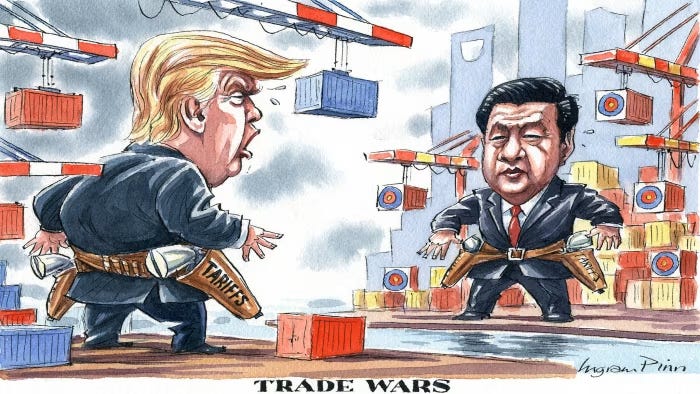
Traditionally, tariffs were the domain of policymakers, economists, and multinational CEOs; in today’s consumer economy, however, the boundary between macro and micro has collapsed, making tariffs a concern for all business owners. In the United States, a country synonymous with consumer choice and entrepreneurial hustle, this new reality is particularly stark. A policy decision made in Washington or Beijing can ripple through a startup’s cost structure within weeks, rewarding startups with capital and supply-chain flexibility while squeezing out those without it. As the U.S. Chamber of Commerce observes, even a small tariff increase can have a “profound effect” on a small importer’s bottom line. This dynamic rewrites what it means to build a consumer brand in America, as founders now compete not just on product or creativity, but on their ability to navigate geopolitics. The result is a consumer landscape where trade policy, not just market demand, helps decide which brands scale and which never get their chance.
In recent years, the United States and China have entered a prolonged trade standoff, with policies like the Section 301 tariffs quietly restructuring the economics of American consumer innovation. The Section 301 tariffs, enacted in waves since 2018, imposed duties of 10–25% on billions of dollars of Chinese imports, including many consumer goods. These measures targeted sectors deeply reliant on Chinese manufacturing, ultimately affecting roughly one-third of all U.S. imports. As a result, many startups saw their costs jump virtually overnight, leading small business owners to consider increasing their prices by the tariff rate or delaying business expansion.
In this tariff environment, access to capital became not just a growth advantage, but a matter of survival. Tariffs operate unevenly across the consumer landscape because they expose operational vulnerabilities that only capital can solve. A 2025 poll showed 60% of American small businesses faced higher input costs from tariffs, typically in the 10–25% range. Lacking any cushion to absorb or pass on these costs, small brands were often forced to cut marketing, reduce product variety, delay launches, or pivot to less optimal domestic suppliers. These kinds of shocks proved existential for some companies: a number of unfunded ventures saw their margins evaporate and ultimately exited the market. Venture-backed brands, on the other hand, could invest in workarounds, reshoring production, bulking up inventory to hedge against delays or dual-sourcing materials. The result is a form of economic sorting in which trade policy amplifies the structural divide between funded and unfunded startups.
In the modern tariff landscape, venture capitalists have started incorporating supply-chain resilience into their due diligence checklists. Venture firms even began talking about a “decoupling premium,” essentially rewarding startups that can manufacture locally or diversify sourcing away from China. One 2025 analysis noted that venture capital firms were utilizing the trade-war period as a “stress test” for founders, revealing which teams are resilient and resourceful enough to turn macro headwinds into opportunity. This represents a subtle but significant shift in how innovation is funded: a founder’s ability to anticipate and mitigate tariff risk has become a core determinant of valuation and investor confidence. As a result, capital is concentrating in fewer, larger companies that can manage compliance and logistics risk.
This change in investor mindset had immediate effects on the startup landscape. Larger venture-backed consumer companies managed to mitigate tariff exposure by shifting parts of their manufacturing to North America, investing in automation or redesigning products to avoid heavily taxed components. More specifically, a recent industry survey underscored that nearly a quarter of U.S. consumer goods executives reported that tariffs drove them to shift sourcing or manufacturing locations. Shifting production requires upfront capital and scale economies that smaller companies lack, widening the gap between the haves and have-nots. Accordingly, smaller indie competitors or early-stage Amazon-native brands often had no such options. Many had to raise prices or eat the added costs, therefore sacrificing profits and growth to survive.
Tariffs now operate as a gatekeeper of innovation, shaping not only trade and consumer prices but also which startups are able to scale. In the American context, this dynamic is especially pronounced, as the U.S. market relies heavily on imported goods. Higher manufacturing costs and supply chain disruptions favor venture-backed companies with the resources to absorb shocks, while smaller, bootstrapped startups are locked out of scaling. When the cost of entering the market spikes, fewer startups attempt market entry, reducing consumer choice and slowing innovation.

Raymond Ashkenazie (GS ’29) is a writer for the Columbia Emerging Markets Review studying Financial Economics and Political Science. His focus centers on financial analysis and the intersection of markets, innovation, and policy.