



In 2024, health-technology investment in Latin America rose by 37.6 percent, reaching 253.7 million USD. In the decade leading up to that same year, more than 1,200 health-innovation companies were founded in the region. Taken together, these trends reveal Latin America’s growing participation in the global shift toward digitalized access to care.
Nowhere has this momentum been more visible than in Brazil. Over the past decade, the country has become home to more than 600 new healthtech startups and has attracted about 1.6 billion USD in funding. Nearly two-thirds of all digital health companies in Latin America now operate in Brazil, which also captured four of the region’s five largest healthtech funding rounds in 2024. These investments have fueled companies creating digital tools that touch every stage of clinical delivery, from patient intake to post-visit follow-up. Their effects are already visible in platforms such as Amigo, Mevo, and Beep Saúde, which are using AI-guided triage to reduce clinic waiting times, automate prescription workflows, and send licensed nurses directly to patients’ homes for vaccinations, diagnostics, and routine services. Together, these three startups alone accounted for more than a quarter of all health-tech capital in Latin America last year.
However, behind the success of these high-profile startups is a structural divide. Brazil’s digital transformation is advancing fastest in the part of the health system used by the smallest share of its population. The country spends between 9 and 10 percent of its GDP on healthcare, which translates into roughly 135 billion USD. According to OECD data, about 60 percent of total health spending goes to the private sector, even though only about 50 million Brazilians, or roughly 25 percent of the population, have private coverage. Despite serving a minority, this sector controls 63 percent of all hospitals in the country. These well-funded, mostly urban networks already operate with stable broadband, integrated electronic health records, and dedicated innovation teams, which allow them to adopt new technologies quickly and with measurable results. Studies of telemedicine and remote-monitoring programs in large private hospitals, including Hospital Israelita Albert Einstein and Hospital Sírio-Libanês, have shown reductions in waiting times, higher patient satisfaction, and improved continuity of care. Their capacity to implement new technologies shows the potential of digital health when infrastructure, staffing, and funding align.
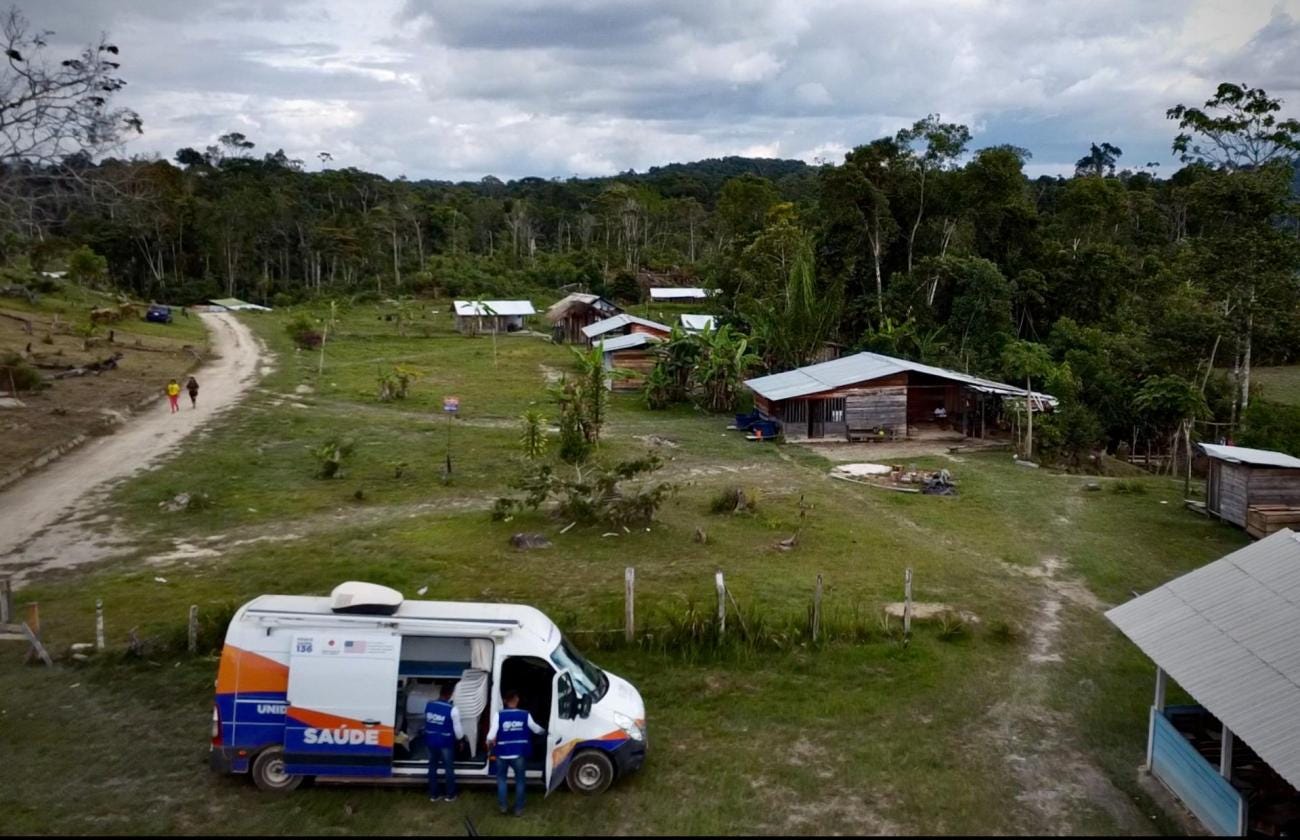
For most Brazilians, however, accessing healthcare looks entirely different. About 164 million people, or about 72 percent of the entire population, rely exclusively on the public system, Sistema Único de Saúde (SUS). Although SUS provides more than 2.8 billion services each year, its ability to adopt digital tools is constrained by major infrastructure deficits. Nearly 40 percent of primary-care units lack stable broadband access, and many facilities still rely on paper records or WhatsApp because national information systems do not function reliably in low-bandwidth or offline environments. Brazil’s National Digital Health Strategy identifies this divide as a “new social determinant of health” and calls for expanded broadband, unified electronic records, and digital-literacy training. Yet recent evaluations from the OECD show that many SUS clinics still lack the basic conditions needed for digital transformation, including interoperable records, adequate hardware, and trained personnel. As a result, technologies that scale quickly in private hospitals remain largely out of reach for the public system that most Brazilians depend on.
These infrastructure gaps, combined with the rapid expansion of private funding, have pushed state governments to explore alternative ways to modernize the public system, most notably through large public–private partnerships. For 2025 alone, Brazilian states announced about 2.4 billion USD in new health infrastructure PPP projects. These include a hospital expansion in Mato Grosso do Sul, a 30-year health complex in Minas Gerais, costing about 1 billion USD, and new administrative facilities in São Paulo. However, independent assessments from organizations such as the Federal Court of Accounts show that most PPP contracts focus on construction, equipment, and non-clinical services, while core digital components such as interoperable information systems, cybersecurity, and digital-skills training are often excluded. As a result, new buildings may open with upgraded physical infrastructure but still face the same digital limitations that prevent many SUS clinics from adopting modern tools.
Improving physical structures alone cannot guarantee that new technologies actually enter hospitals. That depends on how Brazil evaluates and approves them. Since 2011, the country has had a national system for health technology assessment (HTA), but the hospital-level process, known as hospital-based HTA, remains weak and inconsistent across the public sector. A major consensus study found that HB-HTA units are rare, underfunded, and poorly integrated into hospital management. As a result, private hospitals with specialized evaluation teams can systematically assess and adopt digital tools, while many public facilities, lacking technical staff and reliable data systems, often rely on clinician requests, vendor pressure, or court rulings. In practice, this means such technology follows institutional capacity rather than population need.
Without a doubt, Brazil has the capital, talent, and startup momentum to shape the future of digital health in Latin America, and federal leaders have proved that vision by placing digital transformation on the 2025 BRICS agenda. However, aspiration alone cannot ensure that someone seeking care at a public clinic in Belém or Maceió will experience the same digital support that patients already find in private networks in Rio de Janeiro. Closing that gap will require sustained public investment in broadband, interoperable records, and a workforce capable of using new technologies, as well as coordination across the country’s more than 5,000municipalities. Without these structural commitments, innovation will continue to take root where resources already exist, and Brazil risks building one of the region’s most advanced digital health ecosystems that remains inaccessible to most of its citizens.

Iva Jovanova (CC ’28) is a writer for the Emerging Markets Review studying computer science. Having worked in digital health research, she’s interested in the intersection of technology and well-being, with a focus on how innovation and digital infrastructure evolve in emerging markets.