


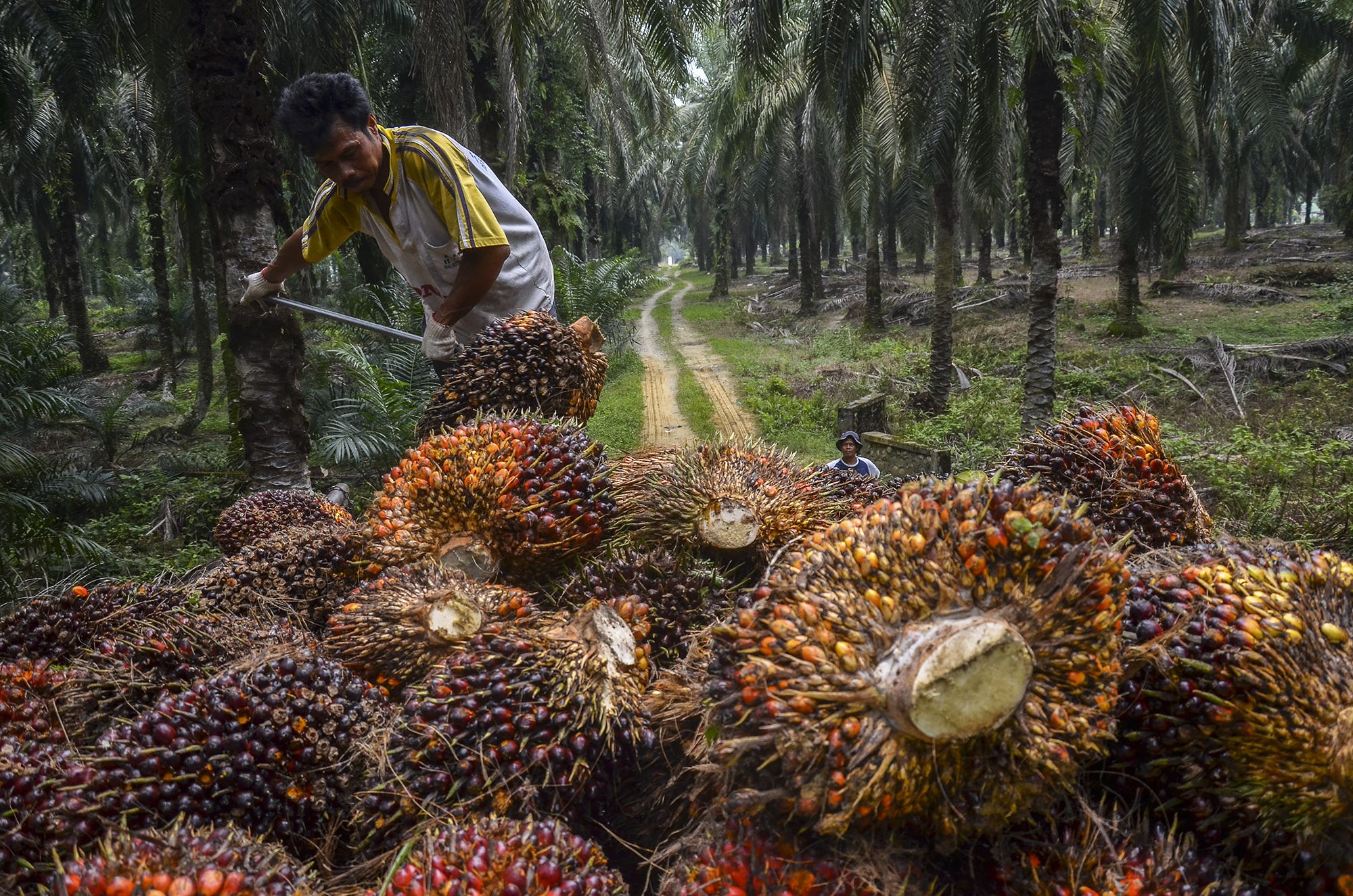
Palm oil is ubiquitously used in consumer products from pizza, deodorant, to lipstick. But this traditional agricultural commodity also serves as the world’s “strategic bet to reduce dependence on fossil fuels”. With uncertainty on global crude oil supply escalating day by day due to disrupted shipping flows in the Strait of Hormuz, demand for palm oil has been rising as a primary feedstock to biodiesel, an alternative energy source.
Malaysia boasts 33.7% of market share in global exports of palm oil. It’s a key player in the emerging markets where its government has positioned palm oil to be the “backbone” of economic growth with active historical development of government institutions like the Malaysian Palm Oil Board and Federal Land Development Authority. Palm oil continues to be a strategic government-sponsored transition to alternative energy assets, contributing around 9.64 Billion USD to the Malaysian economy.
Malaysia’s leverage of palm oil into an energy-linked asset will strengthen its positioning as a key emerging markets player, given continued tension in the Middle East. However, Malaysia’s domestic economy will face greater potential destabilization from tightened correlation to crude oil price and fiscal pressure from constrained policy flexibility when imposing biofuel mandates.
In early March 2026, the Bursa Malaysia Derivatives Index’s May delivery benchmark palm oil contract “rose by 3.7%”, “to close at MR 4,365/metric ton ($1,105.90/mt)”. The relationship between the increasing volatility of crude oil prices and palm oil is shown through significant changes in the palm oil-gas oil (PO-GO) spread as well. The PO-GO spread between Bursa Malaysia palm oil and ICE Singapore gas oil has significantly narrowed from 328.45$ in 2025 to 177.96$/mt as recorded on March 6th, 2026. What does a narrowing PO-GO spread entail? Gas oil prices trade at a similar price to crude palm oil (CPO), indicating to investors that crude oil and palm oil are equally cost-effective. The opportunity cost to substitute from crude oil to palm oil decreases as prices converge by a tighter PO-GO spread. Thus, palm oil becomes a more viable and competitive resource to traditional crude oil.
The Star notes that the Hong Leong Investment Bank (HLIB) research arm said “intensifying Middle East tensions lifted CPO prices to $4,199 per tonne, supporting near-term upstream earnings”. This narrowing PO-GO spread signifies potentially heightened foreign conviction to invest in palm oil as a direct substitute for crude oil. Yet this implies that depending on unpredictable timing and magnitude of conflicts in Iran, palm oil will lose its stability as a traditionally stable source of agricultural demand and instead depend on the pricing of volatile crude oil.
For the domestic economy, relying on palm oil, an increasingly crude-oil linked and volatile commodity, implies the gravity to diversify the palm oil value chain beyond biodiesel stock and secure more steady-based consumption foreign export deals.
The Malaysian Palm Oil Board notes that Malaysia has been attempting to introduce “value-added (downstream) palm-based products” like oleochemicals and consumer goods to further diversify the industry and “cement Malaysia’s status as a comprehensive palm oil powerhouse”. Minister of Plantation and Commodities Datuk Seri Noraini Ahmed links major palm oil importers like China and India to be forced to move its dependence away from Iran due to growing energy prices. She states that Malaysia is projected to take a larger role in exporting their downstream palm oil products as China and India show “tendency to increase stockpile as a precautionary measure against potential logistical disruptions in the Strait of Hormuz.”
However, contrary to what Datuk Seri Noraini Ahmed claims, China is moving away from consuming Malaysian palm oil, with exports to China falling 35.7% in 2025. According to Reuters, China is having greater signs of importing canola or soybean oil instead of palm oil which is a more expensive commodity. Demand for palm oil is elastic, especially for China, who has established a recent trade deal with Canada and increased transactions to buy Australian Canola. But Malaysia’s exports with India remain resilient, with 20% of India’s palm oil being imported from Malaysia. As India’s Impact and Policy Research Institute notes, India has “flexible tariff-rate quotas” and moved towards establishing a “broader technology relationship emphasizing long-term sustainability” with Malaysia. Malaysia must consider two propositions: 1) undergo efforts to tighten an already stable relationship with India to urge for more consistent public policy on palm oil for the Malaysian government investment in “longer term contracts” and more “effectuated trade facilitation agreements” and 2) promote more diversified palm oil value chain products such as oleochemicals to sustainable trade partners like India.
Domestic policies to spur higher concentration of biofuel blend mandates may also contribute to even more volatility. The Malaysian government currently incurs a B10 mandate, requiring companies to purchase diesel that is 10% biodiesel and 90% regular petroleum diesel. This forces Malaysian companies to domestically purchase palm oil, further constraining global supply and keeping prices at a competitive level to crude oil. Maybank Investment Bank states that “accelerating B50 plan”, mandating the blend of 50% biodiesel and 50% crude oil, will “lift CPO demand and price” as a greater percentage of palm oil is to be purchased domestically. Although establishing greater ties with India for palm oil agreements may contribute to more secure revenue streams, it still is contingent upon India’s policies. Same for domestic government blend-mandate policies as well. It is only when CPO is at a competitive price to traditional crude oil that the increased blend mandates will be effective. If fossil fuels become cheaper due to geopolitical instability, a higher blend-mandate will trigger greater fiscal pressure as the Malaysian government will have to offer greater subsidies for companies who will suffer from being unable to switch to cheaper alternative oils.
But does Malaysia have the infrastructure to be able to resolve such blend-mandate induced fiscal pressure? As Malaysia’s Plantation and Commodities Minister Johari Abdul Ghani tells parliament, “Our engagement with industry stakeholders show that they want the government to finance this but we are not ready to fund it.” Malaysia’s government seems to be lacking mechanisms to fund even a B20 mandate successfully, so projected macroeconomic volatility from palm oil’s transition to become an energy-linked asset may be greater than we ever expect.
Palm oil has been and will continue to be one of Malaysia’s greatest assets for economic development. Strategic government intervention such as implementing palm oil consumption agreements and promoting greater diversified downstream palm oil products with India, in addition to increasing blend-mandates should be implemented cautiously. No matter what policy is implemented, Malaysia must enforce policies that they are equipped to tackle with currently limited infrastructure. Geopolitical conflicts are being more and more tied into crude palm oil price whether we like it or not. Thus, US investors should actively track Malaysia’s moves to establish trade agreements with India, diversification of downstream palm oil products, and volatility from changing blend-mandates to make sound judgments on Malaysian investments for a strong emerging markets portfolio.

Ariane Lee (CC ‘29) is a writer at Columbia Emerging Markets Review studying Financial Economics and History. She is passionate about researching promising energy transitions in emerging markets and economic sustainability in Indigenous communities. Outside of CEMR, she loves playing the violin, investing, and learning about new cultures.