


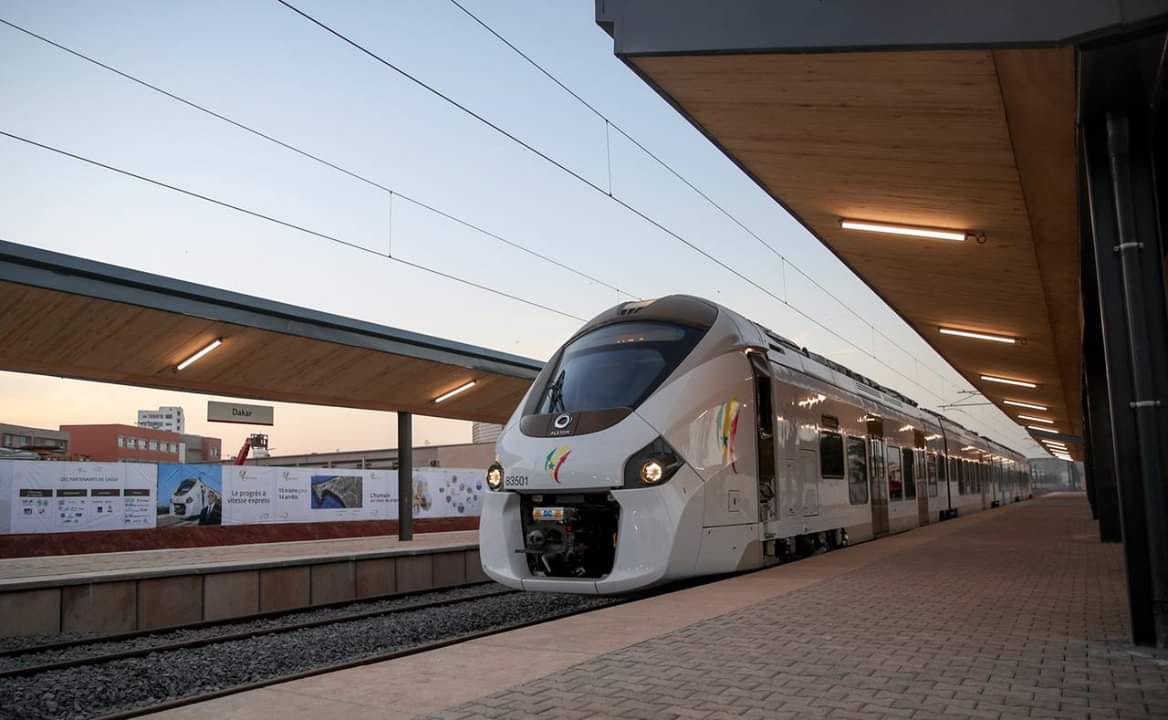
Dakar Railway Station (via Wikimedia Commons)

Sub-Saharan Africa has become subject to growing pains—aging infrastructure, political instability, and burgeoning overpopulation. Among them lies an overlooked but substantial difficulty: traffic gridlock. In the modern era, transportation within the African continent has been mostly relegated to cars and minibuses. This standard, however, comes at an immense cost. The lack of reliable and efficient transportation often cripples the economies of the cities it plagues; affecting local residents and consistent trade. Senegal has had the most apparent deviation from this established standard, highlighting the benefits of investing in public transportation — suggesting its neighbor, The Gambia, should follow suit.
The Gambia, with a population of nearly two million residents, is economically dominated by its capital city, Banjul. About ¼ of the country inhabits the Greater Banjul Area, and it serves as an integral trading location for the country via its port. The Port of Banjul accounts for about 90% of the country’s foreign trade, while acting as a major distributor of cargo to neighboring countries of Guinea and Mali. This centralization of living and trading, specifically within Banjul, has transformed the city into an urban hellscape—gridlocking the city’s main arteries. In a 2011 diagnostic study, the African Development Bank noted The Gambia’s need to integrate various transportation modes for economic development—highlighting their failing infrastructure as a main source of economic loss.
The Gambia’s situation mirrors that of its neighbor, Senegal. Senegal, a country of an estimated 16 million people, is similarly economically centered on its capital city, Dakar. Dakar, a major port city, is integral to the country’s trade — serving not only Senegal, but also Mali, Mauritania, and The Gambia. Recent studies conducted by Senegal’s Agency for the Promotion of Investment and Major Works, reported that traffic jams accounted for over $200 million annually in losses—a staggering metric for the country’s economy; roughly 1% of the country’s economic output. Senegal, unlike The Gambia, has made significant progress in investing into a public rail network — alleviating part of their traffic issue. Senegal’s Train Express Regional (TER) connects Dakar with the neighboring city of Diamniadio. Constructed on a fully electrified standard gauge track, the network runs for 36 kilometers and serves 13 stations, becoming fully operational in December of 2021. The rail network has cut travel times for commuters, with suburban residents able to reach Dakar within 45 minutes. Additionally, the rail network has generated over €33 million, while also decreasing CO2 emissions by 92,000 tons.
While Senegal has taken immense strides, The Gambia has remained stagnant. However, recent development is pointing in the right direction. As a member of the Economic Community of West African States (ECOWAS), The Gambia has become involved in talks to further interconnect the region via rail with other West African partner countries. Such discussion, however, has yet to lead to anything concrete; a lack of action is apparent within plans for further development. In evaluating Senegal’s efforts, in both establishing economic profitability, cutting travel times, and simultaneously decreasing air pollution, The Gambia’s choice in the matter should be clear.
In 2025, The World Bank approved over $52.5 million to improve the Gambia’s aging transportation infrastructure, moving The Gambia in the right direction. While currently focused on road enhancement, the Gambia should reconsider such development. The country should rather prioritize connecting Banjul to its surrounding communities in a similar fashion to Senegal and its urban commuter-based line. In doing so, The Gambia opens itself up to both better trade and reliable transportation. While road development is important, such developments are often cited to have a more negative long-term impact, only increasing the amount of cars on the road, and furthering gridlock. Through a rail line, residents of the Greater Banjul Area would experience decreased travel times, allowing for greater productivity, and also easier accessibility to local businesses, further stimulating the economy. With a decrease in cars on the road, carbon emissions would decrease significantly, while allowing freight movement to experience faster transportation times—better positioning Banjul as a hub for trade and development, and living.
Therefore, The Gambia stands at a unique opportunity. The World Bank’s $52.5 million investment, if redirected towards rail rather than roads, would allow the country to be fundamentally reshaped in a similar manner to Senegal. While ECOWAS focuses on heavier intercountry travel, starting out with a smaller regional network would better position the domestic sector—which is more heavily impacted by traffic gridlock. The country doesn’t need to incur a similarly expansive growth as the TER network; a line connecting Banjul and Serrekunda, for example, would positively impact over 500,000 residents—while being on the small scale of 14 kilometers, keeping costs low and implementation realistic. Senegal makes the case crystal clear; with decreased carbon emissions, and millions in generated revenue, The Gambia too, can reshape travel—prioritizing rail travel before gridlock becomes destabilizing.

Mansour Dieng (CC ‘29) is a writer for the Columbia Emerging Markets Review studying English on a Pre-law track. As a writer, he aims to explore the Sub-Saharan Africa region, more specifically countries within Western Africa. He hopes to explore intercontinental relations amongst African countries and more deeply evaluate the intersection between international relations and the worldly economy, especially within emerging markets and their political and economic transformations.