



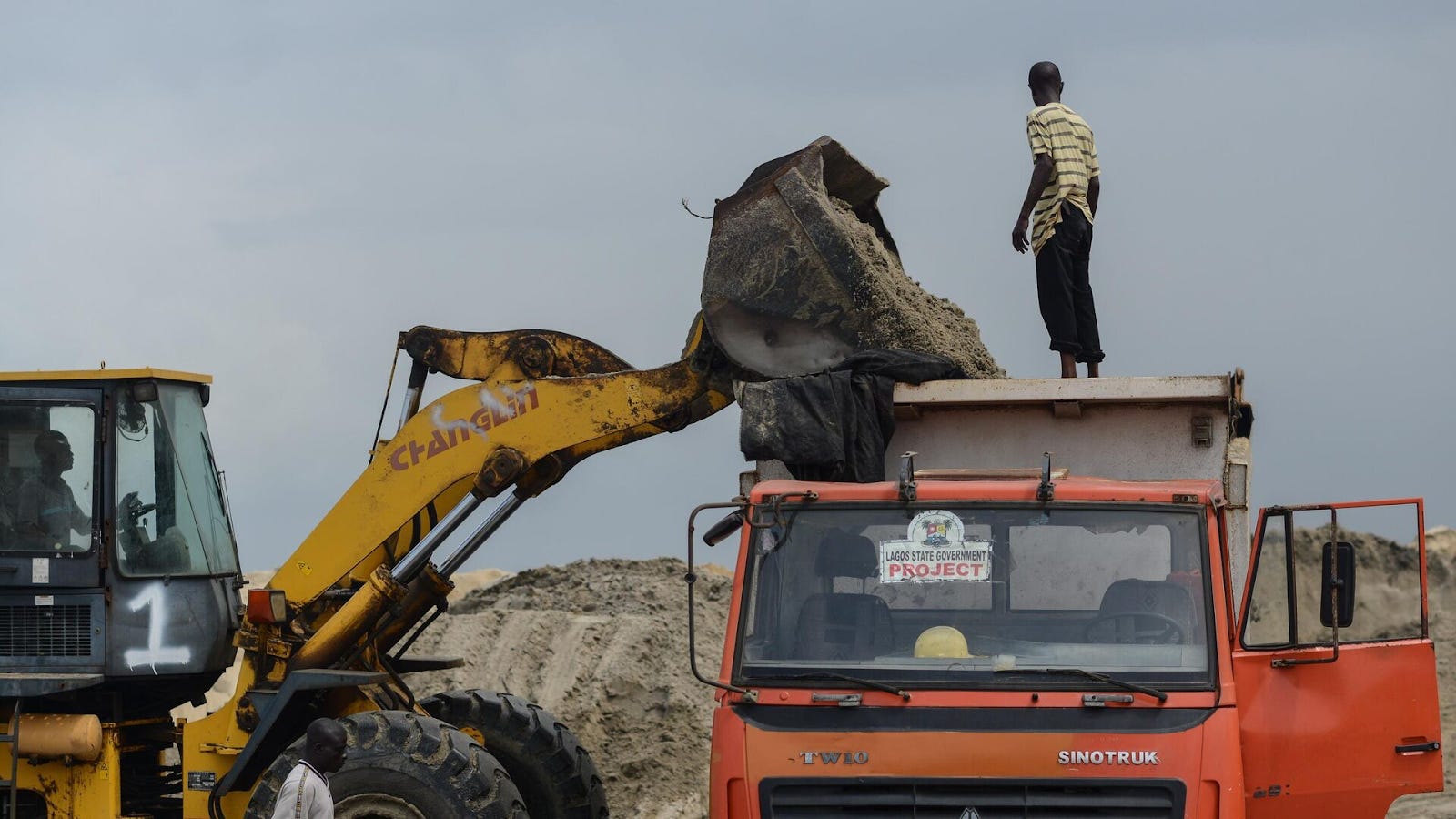
Image source: Nigeria to Commission Lithium & Rare Earth Processing Plants, Diversifying Economy Away From Oil - 14.11.2024, Sputnik Africa
Nigeria is a new battleground in an intense international competition for control over rare earth metals, materials vital to building crucial technology, such as fighter planes, wind turbines, internet fiber-optic networks, and personal electronics. Foreign investments are not new to Nigeria. In fact, they have significantly shaped the country’s economic development: the total value of all foreign-owned assets in Nigeria is $73.7 billion, equivalent to 19.6% of its GDP. Among other industries, foreign direct investments (FDIs) have built up the oil and gas sectors, which compose 90% of Nigeria’s export revenues today. Now, Nigeria’s budding rare earth metals industry is emerging as the next big attraction for foreign investors. In order for Nigeria to realize the generational opportunity for economic expansion rare earth metals offer, it must invest into the industry’s stability: restructuring legal frameworks, renewing infrastructure, and ensuring that mining benefits local communities without harming the environment.
Rare earth metals are commonly referred to simply as “rare earths” and encompass a group of 17 metals. While the U.S. initially monopolized the international rare earths market, this dynamic shifted when American neglect was met with a substantial expansion in the rare earths market by China. From 1993 to 2008, China’s global share of rare earth production grew from 38% to 90%, and by 2011, it had reached 97%. The total market value of the rare earths market is currently $3.95 billion, though it is expected to grow as large as $6.28 billion in 2030, making the changing dynamics of the international markets particularly pivotal. After years of delay, China’s monopoly has gained international recognition. Rare earths are vital in producing technology, ranging from cars and cameras to methods of defense and emerging green technologies. China’s monopoly is seen as a strategic threat in need of urgent solutions. In the wake of competing nations recognizing their inferior position in the market, FDIs in new mining international projects has increased significantly, including in Nigeria.
Nigeria’s mineral market has seen significant expansion: its overall revenue grew from ₦6 billion in 2023 to ₦38 billion in 2024. The Minister of Solid Minerals Development, Dele Alake, pointed out that this occurred despite receiving only 18% of the budget he had requested from the government, a clear indicator that foreign investments played a significant role in the sector’s growth. In fact, the solid earth sector as a whole received $800 million in processing investments.
More focus within these investments has been placed on growing the rare earths industry specifically. The freshly established Nasarawa State plant, now Africa’s largest rare earth and critical minerals facility, attracted $400 million in foreign direct investment and now has the potential to create 10,000 jobs. With a production of about 130000 tons of rare earth oxides in 2024, Nigeria saw an 80% increase from the previous year in its output of rare earths.
Still, Nigeria’s abundant natural resources offer substantial areas for growth. The country has several deposits of rare earth metals, and based on geological surveys, its rare earth industry could be worth billions of dollars. For example, it has about six million total tons of monazite ore, which sells for around $3500 a ton. While many countries have deposits, Nigeria stands out in its diversity of available minerals and in how much of its resources remain untapped.
Room for growth leaves room for change. While the government should amend its practices to promote industrial growth, it must also ensure that rare earths mining in Nigeria generates wealth across local communities and does not replicate the environmental damage done by other industries.
Currently, 80% of mining in Nigeria is conducted either illegally or artisanally. The consequences are clear: Nigeria loses about $9 billion to illegal mining practices each year. This stems from corruption, poor management of solid minerals, and limited coordination between different agencies involved in mining, among other factors. The Nigerian government can address these shortcomings and further advance such investments and growth by expanding the legal framework around mining. There are no clear rules regarding land access, royalty collection, and licensing to ensure a sense of stability beneficial for safe investments. This has had consequences. Lack of clarity regarding standards for licensing authority has led to the government withdrawing mining licences, further inducing an environment of uncertainty. Inviting local and state governments to oversee new projects can also reduce regulatory uncertainty, ultimately benefiting the sector as a whole. A legal reframing is particularly urgent within the rare earths sector. As of now, Nigerian laws on mining lack specific provisions for rare earth elements.
Investor risk can also be mitigated through more public access to geological mapping data, which is currently often hidden behind paywalls. Such mapping is vital for investors to understand the nature of the potential profit they are making. Mining operations would also benefit from a breadth of infrastructure improvements, including greater access to water, improved power supply, and better transportation access. Not only would such improvements facilitate a more effective expansion of the mining industry, but they would also improve the lives of local communities. These investments must be significant, but will be rewarding. Increasing its annual infrastructure spending from $5.9 billion to $14.2 billion would lead to a 4% increase in GDP.
The Nigerian government has a responsibility to regulate the emerging rare earth sector, ensuring that economic growth can be felt by the broader population. Enforcing mandates to ensure companies participate in local hiring and domestic processing of minerals is one key step. It furthers job position potential and expands the career opportunities it creates to include higher-skilled and higher-paying positions. Additional direct equity efforts include companies contributing to the development of infrastructure, healthcare, and education within their “host communities.”
The Nigerian government has continuously neglected its environmental responsibilities. In the past, mining in Nigeria has led to significant deforestation, soil erosion, pollution of air and water, and an overall loss of biodiversity. While regulations have been put in place to prevent environmental degradation brought about by mining companies, these rules remain largely unenforced. Such ecological damage harms local communities, which experience greater health risks due to mining pollution without proper compensation for labor, nor proportional economic benefits within regional areas. Illegal mining has been linked to water contamination, posing a grave risk to both human and animal populations. This concern can be addressed through the implementation of shared benefit agreements, which provide greater opportunities for local communities to raise and leverage their concerns.
Mining has been an extractive and destructive process in Nigeria. With rapid growth on the horizon, change must be swift and begin now. Achieving Nigeria’s potential hinges on a needed rejuvenating of the legal frameworks and infrastructure across the country, but these efforts will only result in reward for the broader population under the condition that companies recognize their obligation to the well-being of the people and environments of the local communities in which they find themselves. The growing rare earth minerals industry can serve not only to expand economic growth achieved through the mining industry in Nigeria, but also to transform its effects.

Mathilda Simons (CC ‘29) is a writer for the Columbia Emerging Markets Review studying Economics and Philosophy. She is interested in sustainable development and the intersection between technology and global economic growth.