


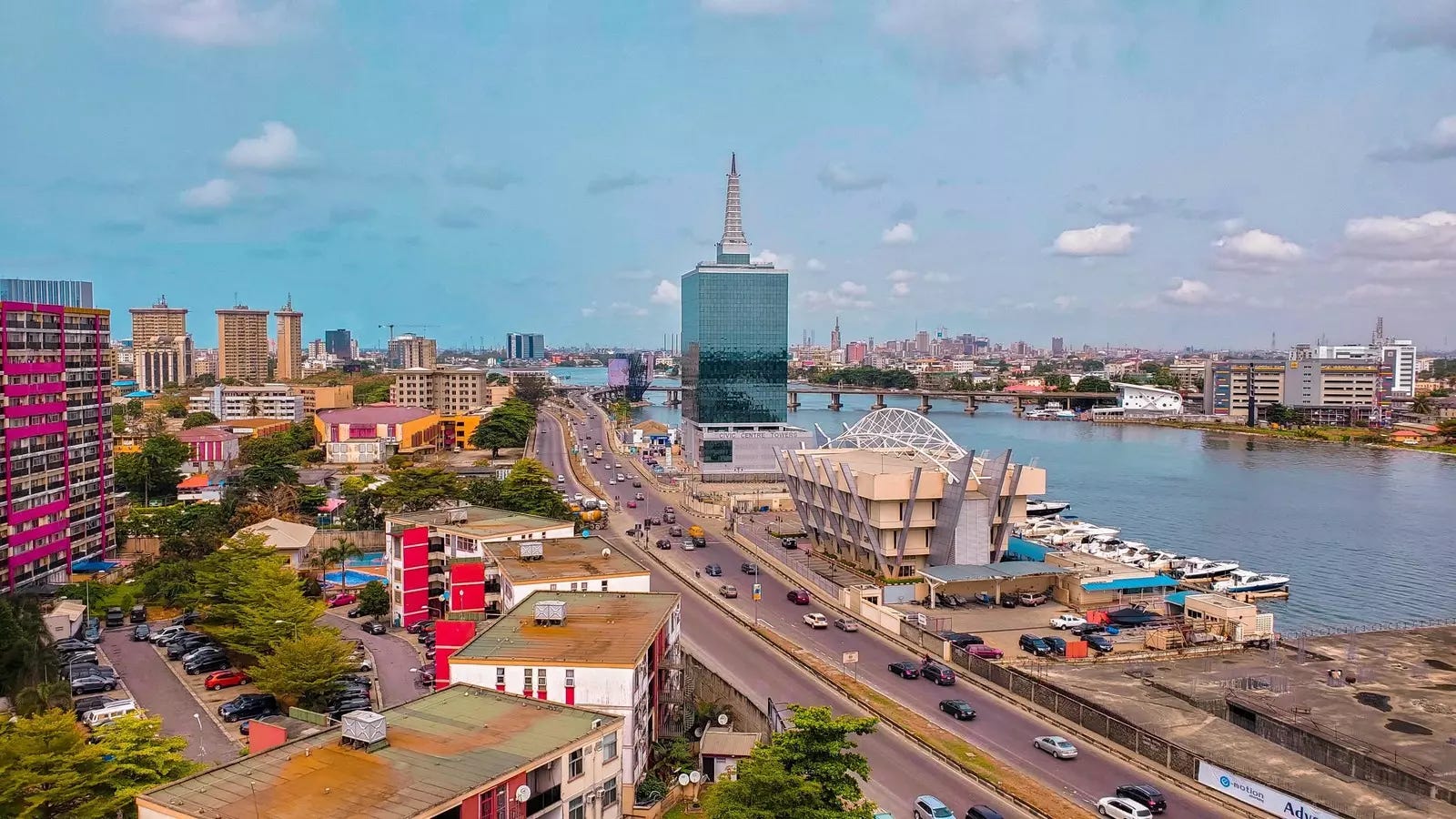
Nigeria is one of the world’s most oil-rich countries, yet its economic and innovation development varies across regions. Cities like Lagos and Abuja have seen steady growth in technological and entrepreneurial activity, supported by research centers, digital start-ups, and financial services. At the same time, many states in the North and parts of the Niger Delta continue to struggle with weaker infrastructure, limited public resources, and fewer opportunities. These regional differences reflect how Nigeria’s oil-dependent federal system collects and redistributes revenue, giving the federal government significant control while reducing the fiscal independence of the states. These patterns point to a larger structural issue. A significant factor behind this inequality is Nigeria’s model of oil federalism, which limits state autonomy and encourages long-term fiscal dependence on federally controlled oil revenue rather than locally driven economic and technological development.
Since oil wealth was discovered in commercial quantities in the 1950s, Nigeria’s economy has been largely shaped by petroleum exports. The federal government collects most oil revenue through Petroleum Profit Tax, royalties, and production-sharing agreements, and these funds are deposited into a central pool known as the Federation Account. From there, the Federal Account Allocation Committee (FAAC) distributes monthly allocations to states. FAAC was designed to maintain unity across regions by ensuring that each state could meet basic budgetary needs, but the system also concentrates financial power in the federal government. Because most states rely heavily on these allocations rather than their own internally generated income, they have fewer incentives to develop local industries or invest in technology and long-term economic planning. This limited incentive structure contributes to what scholars often describe as a culture of dependency, where state budgets depend more on federal transfers than local economic activity. According to the International Monetary Fund’s 2025 Article IV Consultation Report on Nigeria, about 70 percent of government revenue still comes from oil-related sources, which reinforces this fiscal dependence and shapes how states approach development and innovation
According to data from the BudgIT State of State Report 2024, thirty-two of Nigeria’s thirty-six states rely on federal allocations for more than half of their total revenue. Only a few states, such as Lagos, Ogun, and Rivers, generate enough internally to cover significant portions of their expenditures. State of State Report shows that this gap in fiscal capacity shapes economic opportunity across regions. Lagos, for example, has invested in digital tax systems, transportation, and business infrastructure, helping it become a major industrial and commercial hub. In contrast, many northern states and several Niger-Delta states continue to face low internally generated revenue and limited capital investment. This remains the case even though the Niger-Delta states receive the constitutionally mandated 13 percent derivation fund, which returns a share of oil revenue to producing regions, as documented in a 2023 analysis of the derivation principle. Together, these patterns documented in BudgIT’s report and other national analyses help explain why states with lower revenue capacity remain more dependent on federally distributed funds and face greater obstacles in supporting local industries or attracting private investment.
This trend reflects a deeper structural issue. When subnational governments depend heavily on external transfers, they lose both the incentive and the capacity to innovate. Local leaders tend to focus more on negotiating federal allocations than on designing policies that support entrepreneurship or education. Over time, this creates a political culture that values distribution over production. The IMF warns that such fiscal dependence reduces accountability and efficiency at every level of government. The result is an uneven landscape where wealth and innovation concentrate in a few regions while others fall behind.
Research on Nigeria’s innovation ecosystem shows that several institutional barriers help explain why innovation remains concentrated in only a few regions. Even when funds are available, weak coordination between government agencies, industry, and universities prevents new ideas and technologies from spreading across states. Findings from the 2025 study on government interventions and Nigeria’s innovation ecosystems show that research and development spending remains low nationwide, infrastructure gaps persist, and regulatory inconsistencies discourage private investment. These challenges are especially visible outside major hubs like Lagos and Abuja, where weaker institutional capacity makes it harder for states to support technological and entrepreneurial growth. The study also notes that fiscal dependence is only part of the story, since governance quality and local policy design play critical roles in determining whether states can build their own innovation ecosystem.
Concrete examples of this dynamic are visible in the education and technology sectors. States like Lagos and Abuja host innovation hubs such as Co-Creation Hub and Ventures Platform, which operate effectively because these states have stronger infrastructure, more consistent policy support, and partnerships with private investors. These conditions allow Lagos, for example, to attract technology firms and nurture activity in the business sector in ways that most regions cannot. In contrast, states like Zamfara or Bayelsa struggle to provide basic support for small enterprises or research centers, often due to limited capital investment and weaker public institutions, as noted in the State of States Report 2024. Lagos has also invested in digitizing tax collection and public services, which improves revenue and transparency, while many other states continue to rely on manual processes that limit fiscal efficiency and deepen their dependence on federal transfers
This uneven development has long-term implications. When wealth and innovation are concentrated in a few cities, national growth becomes fragile. Shocks such as oil price fluctuations hit states that depend heavily on federal transfers, especially states in the North and the Niger Delta, widening inequality even further. BudgIT’s report notes that many of these states received higher federal transfers in 2023 but still recorded low capital investment. This pattern is visible in several northern states, such as Katsina and Sokoto, as well as in the Niger Delta states like Bayelsa, where dependence on federal allocations has not translated into long-term development. In contrast, regions that generate meaningful internal revenue, such as Lagos and Ogun, can reinvest in technology, education, and infrastructure, allowing their progress to build on itself year after year.
Addressing this imbalance requires more than diversifying exports. It demands a rethinking of Nigeria’s fiscal federalism. States need the autonomy and incentives to pursue independent economic strategies that further their local strengths. Strengthening tax systems, investing in education and infrastructure, and promoting accountability could help shift the focus from oil allocations to productivity. Research on Nigeria’s innovation landscape shows that a genuine innovation ecosystem cannot thrive under fiscal dependence. It requires strong local institutions that can adapt to change, as highlighted in the 2025 study on government interventions and Nigeria’s innovation ecosystems.
Nigeria’s oil wealth once promised shared prosperity, but its distribution model has instead hardened inequality. Federal allocations intended to unify the nation have created a cycle of dependence that weakens initiative and discourages innovation. Yet the country’s diverse regions hold immense potential. States in the North and the Niger Delta could leverage their resources more effectively if given greater fiscal autonomy. In contrast, states like Lagos and Ogun show how internally generated revenue can support technology, education, and long-term investment. The path forward lies not in more centralization, but in empowering states to chart their own paths towards growth. A future where development is driven by creativity rather than oil would not only make Nigeria’s economy more resilient but also more equitable.
Chinasa Iheagwara is a writer for the Columbia Emerging Markets Review, studying financial economics. He is passionate about the intersection between international relations, macroeconomics, and the social hierarchy. Outside of school, he goes to the gym, plays soccer, and frequently travels.