



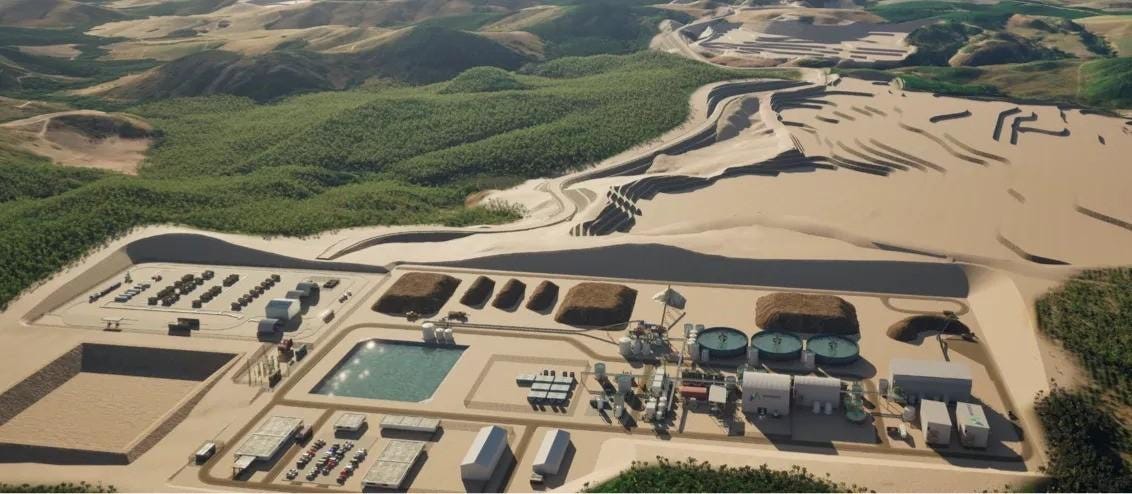
Source: https://meteoric.com.au/caldeira-project/
The recent outbreak of the Iran war and the rise of China’s global economic influence – from semiconductors to critical minerals – have incentivized the U.S. to strategically enhance its bilateral cooperation with Brazil in the rare earth elements (REEs) and critical mineral sector. As a subset of critical minerals, REEs are critical to U.S. national defense and contain 17 metallic elements, known for their magnetism and heat resistance in the manufacture of weaponry. Amid intensifying U.S.-China hegemonic competition and shifting tariff policies, China’s dominance over the REEs supply chain has become a major “foreign dependency risk” for the U.S. – accounting for over 69% of the global REEs mining and nearly 90% of its later-stage processing. On March 28, 2026, the Brazil–U.S. Forum on Critical Minerals was held in São Paulo. The U.S. Chargé d’Affaires Gabriel Escobar stated: “The United States is already investing more than $600 million in critical minerals projects in Brazil, and we see the potential for billions of dollars of additional U.S. investment in this area.” Beyond facilitating foreign direct investment in Brazil’s critical mineral sector, the growing global demand for REEs supply diversification presents a potential pathway for addressing Brazil’s longstanding regional sectoral divergence by integrating enhanced technology and green energy industries into traditional mining regions such as Minas Gerais.
Although Brazil’s Gross Domestic Product (GDP) has increased by a factor of 365 in the 21st century – from $599.64 billion to over $2.19 trillion – its national economic growth masks a significant divergence in regional sectoral composition. A large portion of Brazil’s economic activity is concentrated in its Southeast region – accounting for over 57.4% of the national GDP — in the states of São Paulo, Rio de Janeiro, and Minas Gerais. Within this region, São Paulo dominates economic output, generating over 60% of the GDP with sectoral concentration in finance, advanced manufacturing, and fintech. In contrast, the state of Minas Gerais contributes only about 14.4% of the region’s output with heavy reliance on the traditional mining and commodity-based sectors. In fact, Minas Gerais’ mining sector is historically rooted in the late seventeenth-century Brazilian “Gold Rush” under Portuguese colonial rule, where gold extraction was structured through highly unequal labor systems from the transatlantic slave trade, laying the foundation for a lasting, path-dependent reliance on extractive industries. The legacy of this institutional colonialism continues to be reflected in the sectoral GDP distribution of the state of Minas Gerais.
Despite an increase in GDP per capita of 4.1% – comparing the fourth quarter of 2024 with the same period in 2023 – Minas Gerais remains disproportionately dominated by traditional, labor-based sectors. This has heightened the urgency for the Brazilian government to mitigate such sectoral dominance, especially amid global supply chain instability following the COVID-19 pandemic and the ongoing geopolitical conflict in the Middle East. Specifically, of their total GDP of R$1.06 trillion, R$593.9 billion or over 56% is attributed to the service sector, followed by industry and agriculture, livestock, and forestry. Although tradeable, high-skill intensity services in finance and consulting are highly rewarding, reliance on non-tradable local services – such as those in retail and hospitality – not only constrains external demand but also reinforces Brazil’s persistent wealth disparities and socioeconomic inequalities, including the female labor participation rate gap. Accordingly, sectoral divergence – both between São Paulo and Minas Gerais and between the Southeast region and the rest of Brazil – has prompted the government to expand Minas Gerais’ industrial capacity and broader economy through a new industrial policy plan focused on energy transition and infrastructure, building on earlier responses to premature deindustrialization in the 2000s, such as the “Brasil Maior” Plan (PBM).
In 2022, the Caldeira Project was launched to facilitate Brazil’s goal of developing one of the largest REE deposits in the world outside of China. Located in southwestern Minas Gerais, the Caldeira Project constitutes the largest alkaline deposit in South America, with an estimated resource of 1.5 billion tonnes. One key sustainability initiative of the Caldeira Project is its technique of “ionic adsorption rare earth mineralisation,” which excludes the conventional drill and blast mining practices. This significantly reduces carbon emissions intensity and its relevant environmental impact, while the unmineralised clays will be dewatered and recycled to the landscape to eliminate tailing storage facilities. In January 2025, the Caldeira Project allocated over US$903 million from national organizations like BNDES and the Funding Authority for Studies and Projects (FINEP) to strengthen Brazil’s decarbonisation and energy transition initiatives. In addition, the Caldeira project is listed on the Australian Securities Exchange under the mining company Meteoric Resources, which allows it to raise capital from global retail and institutional investors. Therefore, Caldeira’s low-unit operational cost of approximately US$9.78, large resource base, and ESG-friendly potential have positioned it as a rising player in global and regional emerging markets for green technology on top of the traditional mining industry, with the potential to balance the economic output and sectoral divergence within Brazil’s southeast region under governmental support.
The Araxá Project is another world-class niobium mining operation located within the Barreiro Carbonatite complex in Minas Gerais. This 5km-wide carbonatite hosts significant hard-rock niobium reserves, with roughly 95.47 Mt of the total niobium pentoxide, accounting for roughly 80% of the global niobium supply. Although not part of the REEs, niobium is classified as a critical mineral and plays a crucial role in integrating Minas Gerais’ mining operations with high-technology supply chains. Its primary forms – ferroniobium and niobium oxide – both have substantial market demand: ferroniobium is widely used in the steel production for pipelines and automobiles, while niobium oxide is essential in producing optical lenses and high-temperature alloys for aerospace and defense. Beyond its rich deposit, this project is particularly attractive due to its sustainability approach and exploration upside, as only around 10% of the total project area has been drilled. Its proximity to the city of Araxá has fostered a well-developed industrial and operational ecosystem, providing access to low-cost water, transport infrastructure, and an experienced mining workforce and market. In February 2025, the project was acquired by St. George Mining Limited (ASX: SGQ), which demonstrates a growing interest of Australian mining entities in Brazil’s REEs and critical mineral sector, while posing an asymmetry between the foreign ownership of this state-owned reserve. Although such foreign acquisitions bring capital inflows and valuation upside in the short run, the diminished role of the Brazilian government as a value-chain leader may introduce investment risks through potential regulatory change – such as export restrictions and higher taxation – which could delay project development and reduce profitability.
Thus, although Minas Gerais’ economy has been heavily dependent on its mineral extraction industry, it is essential for the state to distinguish itself from São Paulo’s economic model by focusing on the intersection of mineralization, high technology, and cross-border collaboration, building on the privilege of possessing rich natural resources. The launch of the Caldeira Project and the Araxá Project not only signals Brazil’s leading role in critical mineral development but also serves as a gateway to addressing regional divergence by introducing green energy and high-technology initiatives integrated with mining and extraction. The importance of the REEs in national defense manufacturing presents a strong opportunity for Minas Gerais to pivot its export structure from agriculture-based and traditional mining sectors, such as iron ore and coffee, toward more advanced industrial minerals for sectoral diversification. For investors, despite the promising investment upside for Brazil’s REEs boom, it is important to pay attention to Brazil’s regulatory and compliance risks, particularly in relation to the government industry policies or geopolitical alignment with the U.S. and China, especially as a leading member of the BRICS.

Isabella Fang (BC ‘28) is a sophomore studying Political Science and Economics with a minor in Portuguese. She is interested in the intersection between law and economics, particularly across the U.S., China, and the Lusophone world.