



Image Source:
Nigeria’s movement beyond crude oil exports is a key moment for the country’s economic growth. The Dangote Petroleum Refinery and Intra-African trade under the African Continental Free Trade Area (AfCFTA), a trade agreement aimed to enable the free movement of goods and services across Africa, can enable the country to shift from primary product dependency to value addition and self-sufficiency. If successful, Nigeria’s role in regional trade could shift from a seller of raw products to a leader in refined fuel exports. Nigeria’s integration with the AfCFTA and recent growth in the production of refined petroleum products through the Dangote Refinery have allowed this shift, supporting sustained economic growth. The industrial expansion increases the export potential to West and Central African nations and shows how intra-African trade can reduce regional reliance and enable sustained economic growth.
With global trade restrictions and the expiration of the African Growth and Opportunity Act (AGOA), African countries like Nigeria must invest in refining capacity and infrastructure and streamlining of trade to gain regional energy independence, reduce economic vulnerability to global supply chain shocks, and strengthen value-added exports. This transformation, however, will require reducing tariffs and overcoming operational and regulatory market challenges. This paper will explore Nigeria’s historical reliance on crude oil exports and refined petroleum imports, the impacts of the Dangote Refinery on Nigeria’s economic growth and intra-African trade, and the policy and infrastructure challenges limiting the refinery from fully gaining AfCFTA’s benefits.
Nigeria’s economy relies heavily on crude oil exports, which account for 90% of its export earnings. Since 1956, the country has depended on crude oil exports as a key source of government revenue and foreign exchange. Although this has increased short-term growth, it has made Nigeria vulnerable to global oil price fluctuations, which have led to currency depreciation, inflation, and budget deficits. The over-dependence on oil, which also reflects a lack of economic diversification, indicating underinvestment in other sectors, such as the agricultural sector. This has limited employment and increased income inequality across the nation.
Despite being a member of OPEC and the second-largest producer of oil in Africa, Nigeria has lacked the capacity to process crude oil. Previous state-owned refineries have failed to operate efficiently due to a political approach, instead of an economic one. Decisions based on self-interest and corruption have led to funds going to companies with little expertise. Funding gaps have also led to poor maintenance of existing projects and unfinished delivery of new ones. Around 80% of its domestic demand for refined petroleum products was met through imports. This reliance exposed the nation to supply disruptions and drained its foreign exchange reserves. The reliance on imports from countries including the United States (US) played a significant role in the depreciation of the Naira, as Nigeria sold its domestic currency and bought the USD, which fell by 129% in 2024. The depreciation reduced Nigeria’s ability to secure enough foreign currency, making it even more difficult to pay for fuel imports.
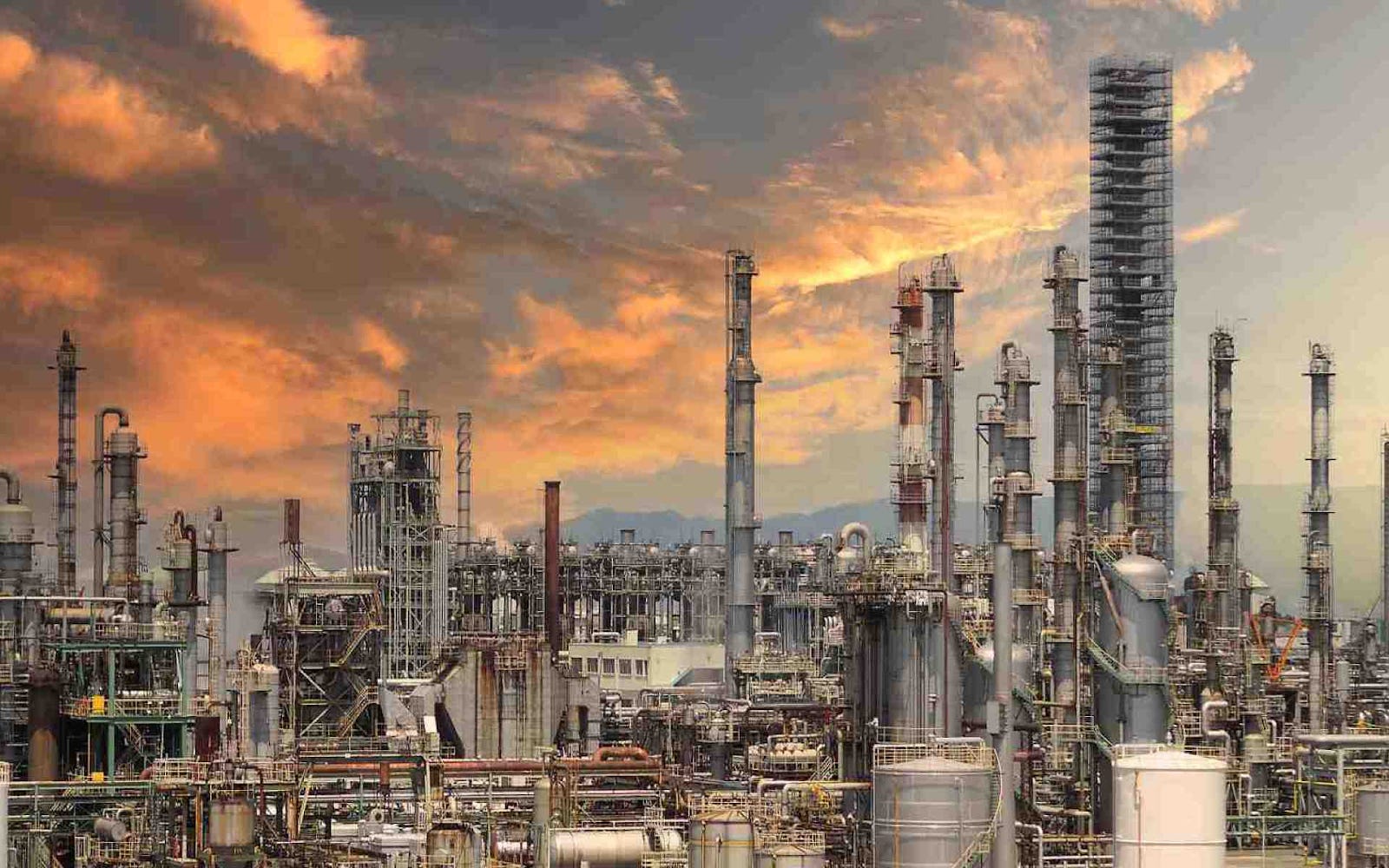
The $20 billion Dangote Petroleum Refinery started operations in January 2024, which marked a turning point in Nigeria’s economic growth. The private initiative, led by the Dangote Group, provides a path away from primary product dependency and toward value addition. The refinery is one of the most significant industrial investments on the continent and one of the largest single-train refineries in the world, with a refining capacity of 650,000 barrels per day (b/d). The facility has enabled Nigeria to become a net exporter of refined petroleum products, including diesel, gasoil, jet fuel, naphtha, and fuel oil. Nigeria’s Minister of Information and Culture classified the Dangote Refinery as a “game changer” that will help boost Nigeria’s GDP, generate forex through exports, and attract foreign investment. Even the Group Executive Director supported its long-term sustainability by stating that the facility can meet 100% of Nigeria’s fuel needs while exporting 40% of its output.
From relying solely on crude oil, Nigeria now has the capacity to process crude oil and supply diesel and aviation fuel. The Dangote refinery is also investing in producing eco-friendly fuel like Euro V, adding more value and competition in the global market. The refinery requires labor at all levels of operations and has promoted skill development for more technical and technological jobs. About 29,000 Nigerian workers are getting trained to contribute at the facility. A rise in direct and indirect employment and higher skilled jobs have led to increased wages and labor income, boosting the living standards of the country.
Dangote Petroleum Refinery’s current output meets approximately 60% of Nigeria’s petrol demand, reducing the country’s dependency on imported petroleum. Historically, reliance on imports had exposed the country to volatility in global supply chains, and it spent about $2 billion on refined petroleum annually. Nigeria also relied on nations like the Netherlands and Belgium for the majority of its refined petroleum. Processing crude oil through the Dangote Refinery saves the country approximately $10 billion in foreign exchange annually. In Q1 2023, it imported 500,000 b/d of refined products; the number fell to 88,000 b/d in Q1 2025 due to the Dangote refinery. The plunge in imports, which was caused by the accelerated construction pace and the use of pre-cast methods in civil works, means that Nigeria no longer holds the title of Africa’s biggest fuel importer. With lower imports and higher exports, its current account deficit has improved and was at a surplus of 6.1% as of October 2025.
The Dangote Petroleum Refinery has enabled Nigeria to export refined products to West and Central African nations. By producing large amounts of petroleum, the refinery can supply locally and internationally. Shifting away from dependence on imports from Europe and the US and instead exporting to intra-African countries, such as Togo, Benin, Senegal, and Gabon, has reshaped the country’s trade chains, strengthening bilateral regional relations and expanding its manufacturing sector. Before the operation of the refinery, even West Africa relied on Europe and other regions beyond Africa for refined fuel. Nigeria’s refinery is a more stable source of fuel, protecting the West and Central African nations from global oil supply volatility. As a result, the refinery reduces external vulnerability for Nigeria and its neighbouring countries, strengthening Africa’s ability to manage supply shocks as a whole.
This increase in trade is also a step toward meeting AfCFTA’s objectives and aligning with its framework. AfCFTA aims to recreate a single market by increasing integration of African nations, promoting investment in product diversification and the movement of goods and services, and reducing tariff and non-tariff barriers to trade. With Nigeria’s large labor force, abundance of natural resources, and now export of refined petroleum, Nigeria is a potential industrial leader under the AfCFTA framework. The labour force is equipped with training programmes provided by organisations like the Dangote Academy, which help workers take vocational skills training to keep up with technological changes and to specialise in their tasks, expanding the capacity of the refinery. By integrating even more deeply into intra-African trade under AfCFTA, Nigeria and other African nations can narrow infrastructure gaps and reduce red-tape challenges. Over time, this improvement in regional supply chains will assist the continent in reducing dependence on external refineries and becoming self-sufficient. This will protect Africa from unstable global markets, increase its industrial potential and help keep its economic value.
Although the Dangote Refinery provides significant potential for Nigeria and Africa, it entails substantial risks. The refinery is still operating below capacity, due to unplanned maintenance issues and the shortage of supply of crude oil from local suppliers, with some estimates suggesting that it only meets 30-35% of national demand. The Nigerian government implemented a 15% import duty on refined products to incentivise domestic production. To further alleviate this problem, increased policy support is required to expand production and prevent Nigeria’s reliance on costly refined fuel imports. Weak transport and infrastructure limit the effective trade of refined petroleum between intra-African nations. The government should also invest in streamlined transportation and shipping to prevent distribution challenges, which are caused by bottlenecks like overloaded local trucks, and to allow Nigeria to use its production to effectively become a regional supplier.
Tariff and non-tariff barriers between countries limit the movement of goods and services within the region. AfCFTA and West and Central African countries should make agreements and deals to simplify transport and shipping paperwork and ensure that there is minimal tariff and regulation on imports of value-added petroleum products from Nigeria to other African economies. Furthermore, although the refinery has positive spill-over effects like job creation in other industries like logistics and ports, the labor force is not well-trained for such jobs. An example of the spillover effect is the creation of thousands of jobs through the refinery’s employment of 4,000 CNG-powered trucks. Expanding national and local training programmes for small and medium-sized enterprises (SMEs) can address the skill gap, reducing job vacancies and increasing productivity. For long-term sustainability and trade efficiency, reinvesting profits from the refinery is key to promote economic diversification and expand production and transport infrastructure.
The Dangote refinery is transforming Nigeria’s economy from dependence on crude oil exports and refined petroleum imports toward domestic production and export of value-added products. As the refinery increases its capacity and continues exporting to intra-African nations, it can reshape Nigeria’s role in the integration of Africa’s markets under AfCFTA. It will strengthen regional integration and reduce collective vulnerability to external market volatility. However, the long-term impact of the shift depends on Nigeria’s ability to move away from over-reliance on crude oil, expand its refinery capacity, address infrastructure challenges, form agreements with regional nations under AfCFTA, and invest in the upskilling of labor within the industry and across related industries.
If these challenges are addressed, the refinery can lead Nigeria to become an independent and stable economy. From a commodity-dependent economy to a regional exporter, the country will be empowered to build strong supply chains, increase forex reserves, and boost productivity, contributing to a growth in GDP. Not only will Nigeria be enabled to expand its economy, but the African market collectively will become more self-sufficient, integrated, and competitive.

Kritvi Kalani is a freshman intending to major in Economics and Mathematics. Having grown up in India and later lived in the UK and the United States, she has witnessed economic differences, which has sparked her interest in Development Economics. She is passionate about researching macroeconomic challenges in developing countries and the policies and technological innovations that can help address them.