


On October 29th, 2025, the country rebuked two decades of left-wing rule, electing centrist Senator Rodrigo Paz– a turning point in Bolivian politics. This is a stunning break from the nation’s past as the Movimiento al Socialismo (Movement for Socialism - MAS) has led Bolivia almost uninterrupted since 2006, garnering support from the country’s numerous indigenous communities.
This year, however, voters were disenchanted. Dwindling foreign reserves, fuel and energy shortages, and an inflationary spiral have plagued Bolivians since 2023, mainly provoked by the collapse of the country’s gas exports. These crises represent approximately 20% of its total exports, but production is in freefall as fields reach their operational limit: 57% of its reserves have been depleted in the past decade. The Andean nation’s overconcentrated export basket, a major cause of economic strife, can be diversified by exploring other natural resources, such as lithium, an increasingly sought-after mineral whose exploration has not yet flourished in the country. Bolivia’s incoming government has the opportunity to develop the country’s latent lithium-mining industry by deregulating the industry and adopting more business-friendly measures to attract foreign investors.
Together with Chile and Argentina, Bolivia is part of South America’s Lithium Triangle and has the region’s largest known reserves of lithium: approximately 23 million metric tons of the mineral. In recent years, lithium has become an essential component of batteries that store electricity for electric cars and solar panels. Given the countries’ reserves, one would expect Bolivia to fare among the top producers of lithium globally. Reality is much more bleak. In 2024, Bolivia produced only 2,000 metric tons of lithium, which is 130 times less than Chile and 70 times less than Argentina. Production is strategic for Bolivia, serving as a potential substitute for natural gas exports and strengthening the country’s position as a relevant player in the global energy market.
Many challenges hamper Bolivia’s ability to explore this natural resource, but all share one thing in common: the overwhelming political and bureaucratic restrictions on the country’s natural resources, which can be traced back to MAS’s 20-year rule. When in power, Evo Morales (MAS’s founder and president from 2006 to 2019), sought to nationalize Bolivia’s natural resources to protect it from “foreign exploitation.” He established a government-owned monopoly, the Yacimientos de Litio Bolivianos (YLB), to develop an all-encompassing horizontal supply chain. In Morales’ project, the YLB would extract lithium from the Salar de Yuni mines, refine it, and transform it into batteries and even electric cars.
This autarkic, industrializing project proved too big of a leap for the country. The ideological rejection of foreign investment proved fatal for Bolivia’s potential. Government-allocated funds were insufficient to construct extraction plants, and the YLB lacked sufficient technical and logistical expertise to extract lithium all on its own. Only in 2023 was the first lithium extraction plant opened, which was over 15 years after Morales’ promises of industrialization, producing only 13% of its total capacity. In an attempt to learn from these previous mistakes, former President Luis Arce (Morales’ handpicked successor turned political nemesis) reversed his mentor’s course and signed Bolivia’s first international partnerships with companies from Russia and China in 2023. However, these deals were criticized for not extracting lithium at a viable commercial level and the lack of transparency, environmental concern, and technology sharing, an ironic development considering the party’s nationalistic ideology.
Mr. Paz has already vowed to audit the Russian and Chinese lithium deals, drawing controversy over the potential effect of breaking those contracts. The President aims to attract foreign investment into the country’s lithium industry as a potential way to revive Bolivia’s struggling economy and bring in much-needed foreign reserves. For that to happen, Mr.Paz will have to create a more stable political and economic environment, providing companies with judicial stability and investment protection from potential future nationalization efforts. There is potential room for reform, as the Bolivian Parliament is now dominated by center-right forces that have already shown interest in deregulation, like right-wing presidential runner-up Jorge Queiroga’s Libre party.
One first step would be to open up the country’s mineral wealth to foreign companies. Bolivia’s Constitution, passed in 2009 with the support of the MAS, established the State’s monopoly over natural resource exploration. Currently, only the YLB has the right to explore lithium in Bolivia, and major management decisions have been subject to governmental approval. The lack of competition discourages investments into increasing productivity and artificially creates barriers to the entrance of foreign companies with the necessary technological and operational knowledge. By revoking the YLB’s monopoly and opening up the market to other players, Mr.Paz will enable the influx of essential foreign capital and expertise to the country and revitalize the industry. In this note, the President has also shown no interest in privatizing the YLB, but is willing to work with foreign partners through joint ventures. These can be essential in modernizing the YLB to compete with other new players and benefit the company overall.
Another important measure is the protection of foreign businesses from political interference, a recurring event in MAS’s government. When in power, Evo Morales nationalized key sectors of the economy that were under external control, taking over more than twenty companies. Major examples include the confiscation of Brazil’s Petrobras oil and gas fields and the seizure of Spain’s national electrical grid from Red Electrica, both carried out using military force. These have hurt Bolivia’s reputation amidst the investor community, instilling an impression of the country as unsafe to do business with, without any judicial guarantees of private property. It is therefore imperative that Mr.Paz passes legislation that protects investors interests and fairly compensates yet unresolved disputes of previous nationalizations. Additionally, Mr.Paz needs to be careful when addressing the Sino-Russian lithium deals, resolving the conflict without resorting to any disobedience of contractual norms and following with any legal obligations even in the event of breaking the agreements. These are necessary steps to reverse Bolivia’s poor reputation among international investors.
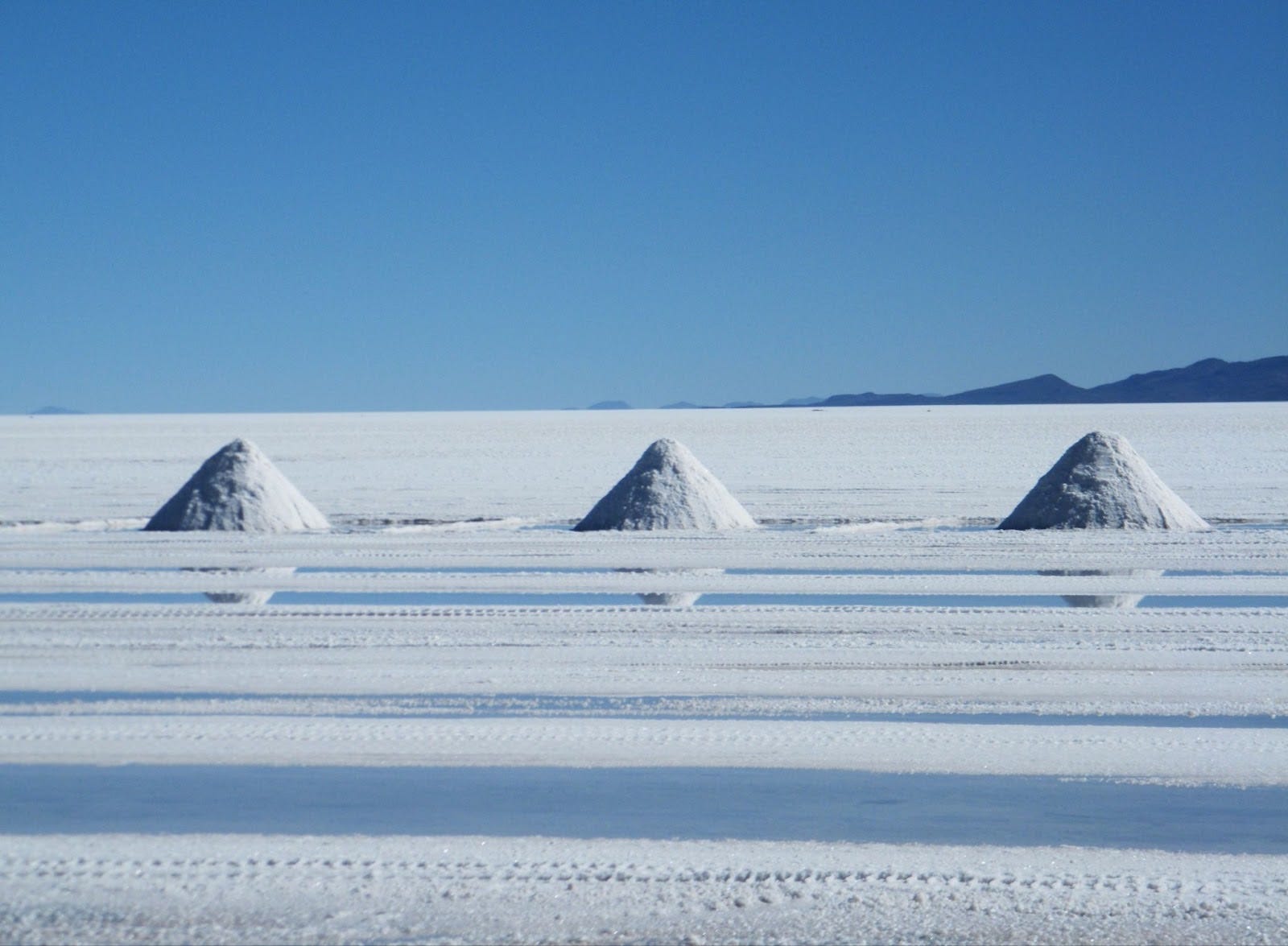
The government will also have to deal with indigenous and environmental activists’ opposition to lithium mining. Most of Bolivia’s reserves are located within the Potosi region in the Salar de Uyuni plains, a region historically marked by the Spanish colonial extraction of silver without any returns for the local communities, a historical trauma that locals fear will be repeated with lithium. They also worry that the intensive usage of freshwater can deplete Potosi’s aquifers, a vital source of the resource in an overall dry region, affecting ancestral agricultural practices and the native’s way of life. Moreover, Bolivia’s Constitution grants indigenous communities extensive self-governance rights and say over resource management in their lands. While the 2014 Mining Law has transferred some power back to the government, enabling them to authorize lithium mining, they still hold huge influence over exploration rights and could form an organized opposition to foreign extraction.
Mr. Paz’s centrist views put him in position to be a bridge between foreign companies and indigenous communities, addressing their concerns through mediation. The President has affirmed multiple times that he is not willing to “sell out” the Salar de Uyuni region, campaigning on what he called “capitalism for all,” seeking to integrate indigenous communities into economic development propelled by capitalism. Promoting sustainable mining practices is key in this context of socially responsible capitalism. Providing funds for hydrological impact studies and incentivizing lower water consumption through fiscal incentives like tax credits are viable, effective measures that do not repel companies by sharing the burden of environmental protection. Policies like these can be extended for investments in the local economy and the hiring of indigenous workers, generating positive economic and social impacts beyond the local resources. If the government manages to placate indigenous concerns through business-friendly measures, lithium mining’s sustainable exploration can be solidified and made more equitable, providing socioeconomic development for the local communities while protecting the environment and their way of life.
Mr. Paz was sworn in on November 8th, 2025. It remains to be seen how vigorously the new government will address the lithium issue. Regardless, his plans are a step in the right direction for Bolivia. Hopefully, the new government will explore this historical opportunity to deregulate and open up the lithium mining to foreign investors while protecting the nation’s social and national security interests. If done correctly, debureaucratization will spur the emergence of Bolivia’s lithium mining operations, propel short-term economic growth, and lead to sustainable development in the future.

Hugo Bueno (CC ‘29) is originally from Rio de Janeiro, Brazil. Passionate about politics, economics, and inclusive education, he seeks to pursue a major in Financial Economics with a minor in Political Science. Hugo hopes to later work in the finance industry, but in his free time, he enjoys reading, writing, and trying new foods!