


Source: Avishek Das/SOPA Images/REX/Shutterstock
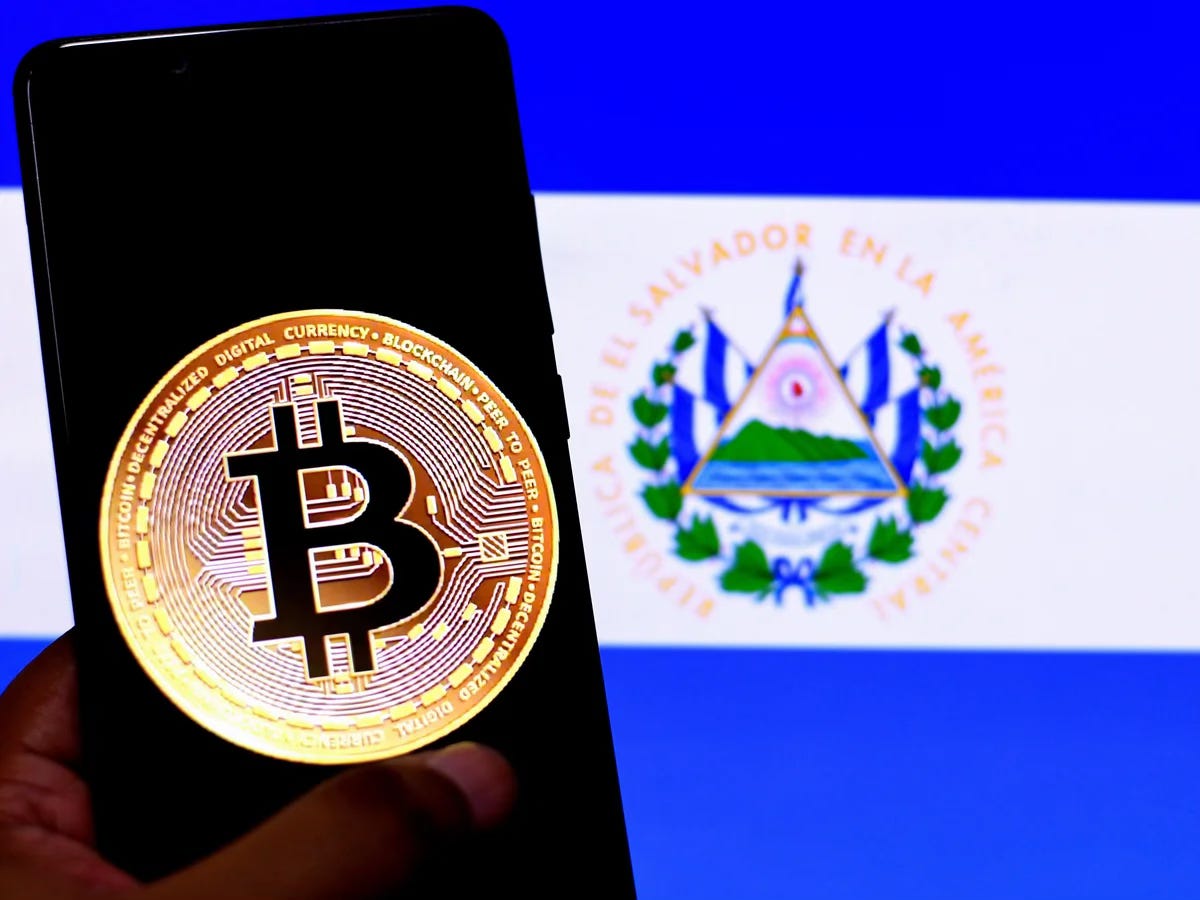
In September 2021, El Salvador’s adoption of Bitcoin as a legal currency was seen as a breakthrough, where President Nayib Bukele and his supporters argued that Bitcoin could potentially address the nation’s economic problems, ultimately reducing remittance costs, expanding access to basic banking systems, increasing investment, and making the country more attractive to investors to modernize its payment systems. However, over time, the gap between expectations and outcomes became clear, and by 2025, the government decided to partially reverse the policy by making private-sector acceptance voluntary. This failure wasn’t solely due to the low adoption rate, but because Bitcoin was introduced as a currency before El Salvador was able to build the trust, infrastructure, and stability needed to support it. Moving forward, the country should use Bitcoin as an optional investment or technology, and instead focus more on practical reforms like lowering remittance costs and improving financial access.
One of the main reasons why Bitcoin didn’t work out is that most people did not use it as money. At the beginning, economists and the government predicted that reducing transaction costs would have a noticeable impact because remittances make up a large share of El Salvador’s economy. This made remittances one of the strongest arguments for the nation to adopt Bitcoin in the first place, but this expectation did not happen as expected. After all, turning something into an official currency doesn’t guarantee that it’ll work as a widely accepted medium of exchange. In El Salvador, Bitcoin adoption was implemented by the government instead of emerging from everyday use. El Salvador’s Bitcoin Law, which passed in 2021, required businesses to accept Bitcoin, forcing it into a form of official currency. At the same time, data from Americas Quarterly shows that around eight out of ten Salvadorans did not use Bitcoin, while crypto-based remittances made up only about 1% of total remittances through Chivo, a digital app created to send, receive, and convert Bitcoin. This means that the other 99% was still sent using normal methods like cash and banks. Even with the government’s active currency promotion, most Salvadorans continued to rely on traditional dollar-based channels, where it emphasizes a key limitation: even when new financial technology is available, people won’t adopt it unless it’s clearly easier and safer than the established traditional methods. This low remittance use matters because remittances were one of the government’s main justifications for
the policy. So basically, the government attempted to impose demand for Bitcoin, but money only truly works when people willingly choose to use it in their everyday lives.
Less developed economies are most affected by Bitcoin’s volatility and lack of central authority overseeing it, which is the reason why it’s harder for Bitcoin to work as a dependable currency in El Salvador. In fact, a currency should be stable enough to act as a standard unit for pricing and as a means of exchange. However, due to Bitcoin’s frequent price changes, it ended up making it unreliable for daily transactions. In a lower-income economy, this issue is very significant since households and small businesses have a hard time handling financial risk. In 2024, Goldbach and Nitsch claimed that after Bitcoin adoption, El Salvador experienced a noticeable decline in official cross-border financial flows, emphasizing that increased uncertainty may have been a primary reason for discouraging economic activity. Similarly, Benjamin Kurylo’s article From Dollarization to Bitcoinization: El Salvador’s Monetary Experiment suggests that neither dollarization nor Bitcoin adoption alone has been enough to create sustained economic development. This emphasizes the idea that only changing the form of currency does not address deeper structural issues in the economy, such as low productivity, inequality, and weak government institutions. Without these basic conditions, introducing a new currency doesn’t lead to long-term growth, which is the reason stability, and not new forms of money, should be prioritized for the success of a currency in El Salvador.
Another reason the policy struggled was due to the government’s main tool to promote adoption. Specifically, the Chivo wallet was not able to become part of people’s regular financial use because its launch ran into technical problems, and many users downloaded it just to claim the initial financial incentive rather than using it in their daily lives. Most importantly, limited digital infrastructure and uneven internet access made it difficult for a digital currency system to function effectively. These challenges point to a more fundamental problem: financial innovation cannot replace underlying economic and institutional conditions. Without reliable infrastructure and public trust, new technologies are unlikely to be widely used. To increase trust, the government would need to make Bitcoin fully optional, improve consumer protections, and provide clearer information about potential risks and usage.
At the same time, some supporters point to overall economic improvements in El Salvador, including stronger investor confidence and better sovereign debt performance. However, these outcomes do not necessarily show that Bitcoin worked as a currency. Other factors, especially the government’s crackdown on crime and broader economic policies, likely explain these improvements. Also, some sources promoting this view may have financial interests in Bitcoin or Salvadoran assets, which means that their conclusions should be interpreted with caution. This is also shown by how few people actually used Bitcoin because, in reality, most Salvadorans did not continue using Bitcoin regularly after the initial incentives, and transaction activity remained low compared to dollar-based payments.
Taken together, low adoption, limited remittance use, and volatility already suggest that Bitcoin did not function effectively as a currency in El Salvador. The policy’s partial reversal further reinforces this point, where in 2025, El Salvador reformed its Bitcoin law so that businesses were no longer required to accept it, and the government reduced its role in Bitcoin-related activities. This shift, which was connected to an agreement with the International Monetary Fund, emphasizes that the original policy was not sustainable because if Bitcoin actually had worked out as a currency that people actually used, there would have been little reason to scale it back. Ultimately, El Salvador’s experience only reinforces the idea that monetary success depends more on stability, trust, and institutional support than on introducing new forms of money. Bitcoin may still play a role as an investment, but it has not become an everyday currency. It didn’t replace the dollar, didn’t significantly change remittance behavior, and only ended up introducing volatility into an economy that needed predictability. While the policy attracted global attention, attention alone does not guarantee success. El Salvador’s next step should not be another attempt to force a new currency into use, but a shift toward practical financial reforms that make payments cheaper, safer, and more trustworthy for ordinary people.

Diana is a freshman at Columbia College, and she is planning to major in Economics. She is from South Korea but lived her entire life in Managua, Nicaragua. Diana enjoys playing volleyball and writing in her free time, specifically about economics in emerging markets.