



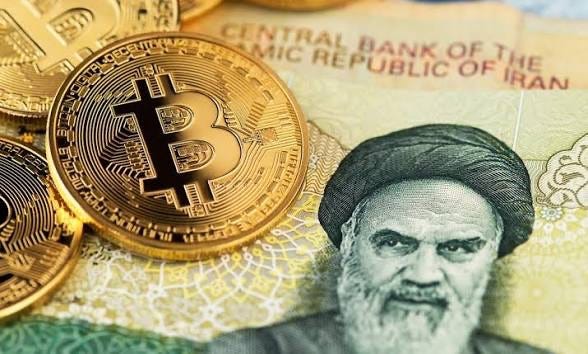
When the guns go silent in Iran, the world will shift its focus from the battlefield to the nation’s future. Much of the current discourse surrounding the conflict has centered on escalation risks, supply chain disruptions, and regional security dynamics. Far less attention has been given to Iran’s economic future once the war subsides, yet this question is central to both Iran’s recovery and its role in the global financial system.
Prior to the current conflict, Iran’s economy had already been shaped by decades of sanctions dating back to 1979, persistent inflation, and repeated currency instability. As the value of the Iranian rial declined and Iran remained largely excluded from global financial systems, individuals and institutions increasingly turned to alternative mechanisms for storing value and transferring capital. Cryptocurrency has emerged as one of the most prominent of these alternatives, with activity rising during periods of economic and political stress. Recent conflict has further intensified this dynamic. Following the first airstrikes this past February, cryptocurrency outflows from Iranian exchanges surged. Millions of dollars exited the country within hours as users responded to the outbreak of war. These patterns highlight the role of crypto as a reactive tool shaped by instability, rather than a stable financial system.
As Iran emerges from the war, it will face a critical monetary crossroads: whether to continue operating within a fragmented system increasingly reliant on decentralized financial tools or to restore a credible, centralized national currency. While a comprehensive, formalized adoption of cryptocurrency may seem to be Iran’s best path forward, evidence from other inflation-stricken countries suggests that digital assets function primarily as a hedge against instability rather than a sustainable replacement for sovereign monetary systems. If Iran is to achieve long-term macroeconomic stability, attract foreign investment, and reintegrate into global financial markets, a post-war government will need to prioritize rebuilding trust in its national currency through credible monetary and institutional reforms.
Solely depending on cryptocurrency as an alternative to the Rial would not address the numerous challenges facing the embattled nation. While digital assets may offer individuals a way to preserve short-term value, they do not provide the institutional framework required to manage inflation, regulate financial activity, or support long-term investment. A post-war economy requires coordinated monetary policy and credible financial institutions, functions that decentralized systems are not designed to provide.
In practice, this means that during periods of instability, individuals move funds into cryptocurrencies to protect their savings, a pattern consistent with broader capital flight in unstable economies. This cycle reflects a lack of confidence rather than a transition to a new financial system. It also limits the state’s ability to manage the economy, as capital moves outside traditional channels that support monetary policy and financial regulation. In emerging markets, increased reliance on digital assets has been shown to weaken financial stability by bypassing institutional controls. For Iran, this creates a fragmented system in which neither crypto nor the national currency provide a reliable pillar for long-term economic stability. The question is not whether digital assets will continue to exist in the economy, but whether they can serve as the only foundation for recovery. Evidence from Iran’s recent crypto activity and comparable cases suggests that they cannot.
In Argentina, annual inflation has exceeded 100 percent in recent years, sharply eroding confidence in the national currency. In response, many households have turned to cryptocurrencies and stablecoins to preserve value and protect savings, making Argentina one of the world’s leading adopters of cryptocurrency. Despite this widespread use, crypto adoption has not resolved the country’s underlying economic instability. Inflation remains high, and the peso continues to anchor most economic activity. In this case, cryptocurrency functions as a tool for navigating instability rather than a solution to it.
If Iran is to move beyond its current financial dynamic, rebuilding monetary credibility will require more than just limiting reliance on cryptocurrency. A post-war government will need to implement reforms that directly address the structural weaknesses that led to widespread adoption in the first place.The first step is restoring central bank credibility. This requires greater independence in monetary policy and a clear, sustained commitment to controlling inflation. In practical terms, this would involve reforms such as unifying Iran’s multiple exchange rates, which currently create arbitrage opportunities and weaken confidence in the currency. As policy analysis has shown, inflation cannot be stabilized without first addressing distortions in the exchange-rate system. Without these changes, any national currency will continue to face the same loss of confidence that pushed individuals toward alternative assets.
The second step is rebuilding the financial system itself. This requires restructuring state-owned banks, improving oversight of lending practices, and increasing transparency in how capital is allocated. In Iran, weak regulation and political influence over financial institutions have contributed to inefficiency and a lack of trust. Addressing these issues is essential to restoring confidence among citizens and international investors. In post-Soviet economies such as Georgia, reforms included large-scale anti-corruption crackdowns, simplification of tax and customs systems, and the restructuring of public institutions, which improved governance and helped attract foreign investment. Similar measures in Iran would be necessary to rebuild credibility and support economic stability.
The final step is reintegration into global financial markets. Iran’s ability to reenter these markets will depend on more than sanctions relief. It requires establishing a stable exchange rate system, enforcing transparent financial regulations, and aligning domestic banking practices with international standards, including anti-money laundering compliance and access to global payment systems. These changes are necessary to rebuild trust with international institutions and investors. Without them, cryptocurrency will remain a workaround for instability rather than a foundation for recovery.
Ultimately, as Iran emerges from the war, its economic future will depend on whether it can rebuild the institutions weakened by decades of instability. This means restoring central bank credibility, restructuring the financial system, and reestablishing connections to global markets through transparent and enforceable reforms. Cryptocurrency has expanded as a response to instability, but it cannot provide the structure needed for long-term recovery. A stable economic future will depend on Iran’s ability to reassert control over its monetary system and rebuild trust in the institutions that support it.

I am an undergraduate student in the Dual Degree Program between Columbia University and Tel Aviv University, studying Cognitive Science with a focus on decision-making, political behavior, and economic systems.