


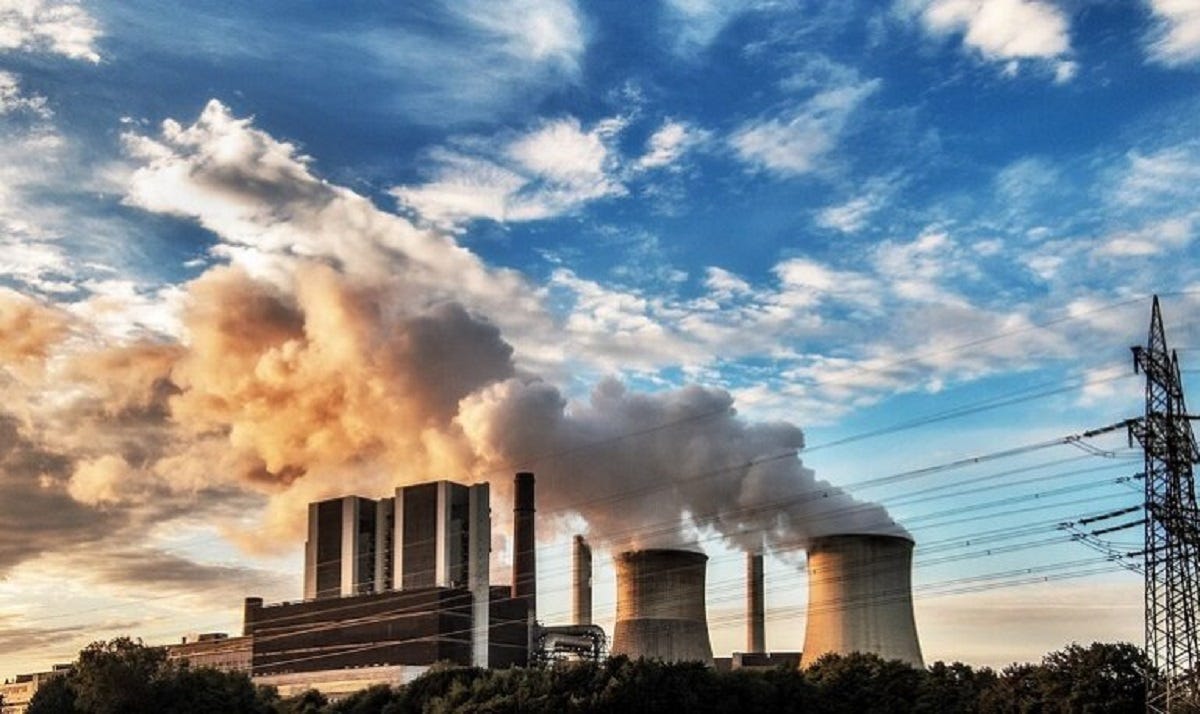
African nations hold 30% of the world’s most vital carbon sinks within their dense forests, savannas, and other natural ecosystems. In the realm of climate finance, this corresponds to a high value for the global economy in Africa’s ability to absorb carbon emissions. But despite the environmental potential, Africa’s climate finance market remains greatly underfunded by foreign investment—and the root causes are trust and transparency.
While Africa’s environments position its countries as strong contenders for carbon market investment, their potential is often underutilized because developed countries avoid investment due to financial risks, such as political instability and uncertainty about returns on early-stage projects. This inhibits the potential economic growth for Africa in the field of climate finance, as it hinges upon credible government management and international collaborative funding. Considering the climate finance strategies in two particular case studies—Ghana, the first African nation to establish international carbon credit partnerships and experience the associated structural financial risks, and Kenya, whose newly launched carbon registry represents the continent’s most deliberate attempt to build investor credibility at the government level—reveals that lack of credibility is the main cause for limited foreign investment opportunities, fueling a persistent climate finance gap between Africa and the developed world. To counter foreign investors’ aversion to financial risk, the strongest approach for African countries would be to utilize transparency to direct investment growth and sustained development in climate markets: Kenya’s recent national carbon registry, which establishes credibility in its climate finance projects, offers a promising mechanism to do so.
In 2016, Article 6 of the Paris Agreement established international carbon markets, where intergovernmental trading offers financial support for climate mitigation in developing countries, as a key force for achieving global conservation goals. Carbon markets function through countries and companies that buy carbon credits (units of carbon dioxide reductions) from other countries implementing climate mitigation efforts; these credits then count towards the purchasing country’s requirements for fulfilling the Paris Agreement goals. This enables developed nations to buy credits from developing regions that hold more natural resource opportunities, such as vast forests of carbon sinks, like Africa.
In recent years, countries in the Sub-Saharan African region have consequently adopted national and technological policies that suggest an economic tactic of nationalized focus on climate finance. The approach directs funding towards countering drastic climate deterioration, to which Africa has been especially vulnerable. Simultaneously, internationally-funded climate mitigation creates its own sphere for investment where developing countries can channel economic growth. In theory, focusing on climate projects would thus amplify substantial investment into African countries; however, the impact of weak governance on carbon tracking credibility has limited the execution of this investment potential.
Ghana’s 2022 Transformative Cookstove Project, a collaboration with Switzerland, was one of the first tangible implementations of Article 6’s international climate finance system. The Swiss-based KliK Foundation financed the distribution of over 180,000 improved cookstoves to smallholder farmers across Ghana, in exchange for carbon credits to count toward Paris Agreement requirements. This was the first use of merging foreign investment with climate mitigation, marking a strong step in international economic collaboration, and even creating a credit currency called Internationally Transferable Mitigation Outcomes (ITMOs). By July 2025, Ghana had transferred 11,733 tons of ITMOs to Switzerland, while simultaneously experiencing fuel efficiency gains and health improvements for Ghanaian farmers and households, leading to economic savings.
Despite the perceived success of the project, the system features a hidden financial drawback for Ghana by positioning the country away from market investment control. The Switzerland-Ghana agreement establishes a relationship of economic imbalance; Switzerland handles all the high-value roles of controlling investment, verification, and process design, while Ghana is mostly limited to labor-based implementation. Though foreign investment provides financial relief, the system restricts Ghana to low-level roles in a growing carbon market sector, setting up the country and neighboring African participants for a future of continued financial dependency and stagnated economies. As United Nations University scholars have noted, on a global level, climate finance mechanisms can consequently inadvertently reinforce existing economic asymmetries when developed nations control investment design while developing nations execute the work. This pattern is prominent in Sub-Saharan Africa, where the division between investor-controlled design and African-led implementation is structural, rather than a reflection of technical capacity. Ghana’s limited voice in setting credit valuations and verification standards compared to Switzerland reflects this dynamic.
Countries that hold domestic autonomy over their own development frameworks attract investment on better terms because they can credibly set the conditions under which capital enters. Thus, for sustained economic development, remaining in the implementation tier of the climate finance sector is not sufficient; to ensure integration into future thriving financial sectors like carbon markets, African nations need to prove their ability to attract and manage climate finance projects.
The key mechanism by which carbon market investment can be attracted is to target the root of the issue: lack of transparency. Kenya’s climate finance projects in past years, specifically for land reforestation, locate the potential for this approach. Kenya’s Watershed Services Improvement Project aims to deploy $200 million towards restoring and managing watersheds to help with landscape restoration. Funding will be divided into various climate mitigation spheres, with 57% directed towards forestry. Economically, restoring watersheds promotes sustainable development and opens up agricultural job opportunities, but also establishes stronger management over Kenya’s land and reduces conflict over natural resources, lending towards economic and ecological stability. But as a relatively newer, wide-scale project, the watershed plan remains solely backed by the World Bank’s International Development Association (IDA), financially limiting its ability to expand beyond the current scale—which is where Kenya’s latest government tactic comes in.
On February 17, Kenya launched a novel effort to establish itself in the international climate finance sphere: a national carbon registry that tracks, manages, and trades all carbon credits in Kenya. The registry is controlled by the National Environment Management Authority, which oversees all Kenya’s environmental activities in accordance with the Paris Agreement, centralizing the country’s carbon credit activity at a governmental level. The registry reports all carbon market activity between Kenya and the developed nations financially backing them in one comprehensive, structured platform—but its particular strength comes from a strict focus on credibility.
A significant cause for the lack of investment in African countries in the climate finance sector is the financial risk associated with inaccurate carbon tracking. Due to repeat offenses of double counting emission removals, weak oversight of offset projects, and inflated reduction claims, scrutiny of international climate finance has increased, diminishing the confidence for developed nations to invest in carbon markets. With this in mind, Kenya’s registry combats the lack of investment through its emphasis on recording project approvals and providing transparent nationalized accounting systems to verify reduced emission numbers and prevent double-counting of carbon units. Crucially, Kenya has also included individual sector-based registries within the national carbon tracker; for example, the forestry carbon registry allows for a comprehensive division dedicated to managing agriculture-based climate investment as its own industry. These sectors allow investors to directly track project prioritization and progress to decide where to invest their money. Finally, through the financial backing of over $2.6 million USD of German investment, this national registry presents itself as not only internationally compliant, but actually collaborative in its accordance with the Paris Agreement.
Already receiving 80 project proposals from interested investors, the registry indicates an effective approach towards integrating African countries into more powerful positions within carbon markets, simply by utilizing government oversight to emphasize transparency, build cross-border trust, and mitigate risks to entice investors. Most importantly, the registry also facilitates and transfers the issuance of reliable carbon credits itself, establishing an international trust in Kenya’s ability to serve a higher-value position in the carbon market sector. This is the key piece that distinguishes the new path Kenya is forging from previous climate finance attempts in the region: the focus on building transparency and reliability garners trust as a more central player in the market, providing an opportunity to capture more of the value of the carbon credit transfer process. Kenya has further legitimate control and awareness over its carbon credits, allowing for stronger bargaining power to retain a greater share of the financial benefits generated by carbon markets.
However, Kenya’s registry was also financed partially by German investment, which creates a particular complexity to the approach of using carbon registries to achieve investment control. For previous similar cases, foreign aid patterns have found that aid donors can shape the domestic policy choices of recipient countries, since autonomous nations attract investment on better terms when they set their own conditions. Because the technical standards embedded in Kenya’s new registry are designed primarily by international partners to meet international investors’ expectations, Kenya could fall to governing its market according to other developed nations’ rules, which may trade one form of dependency for another. For this reason, Kenya must prioritize control over the standards its own registry enforces, beyond just the control over its carbon assets, to avoid further foreign dependency. However, Kenya’s partnership with Singapore and the United Kingdom in the Coalition to Grow Carbon Markets, which establishes shared principles for carbon credit use among companies and sets policies to restore international confidence in carbon markets, shows that Kenya is taking steps to shape global standards rather than simply comply with them. As a co-author of those principles, Kenya has taken a position of influence over the rules of the market it is entering, which ensures the country’s ability to build institutional credibility without excessive foreign dependence.
It is also important to note that Kenya’s international-funding approach can feature qualitative consequences on domestic companies due to tighter governance. The clearest recent example is the collapse of KOKO Networks, a clean-cooking company serving 1.5 million households with subsidized bioethanol fuel. When Kenya denied KOKO authorization for the volume of credits they wanted to export internationally, concerned that the company would monopolize Kenya’s market quota, the company collapsed. This raises a significant concern for Kenya’s carbon market infrastructure: if implemented improperly, rigorous government oversight could counter the primary intention of clean-energy projects, which depend on their authorization for carbon revenues. In this case, African countries must maintain clear transition mechanisms in the national registry implementation process to prevent government regulation from inadvertently debilitating climate mitigation projects.
Although Ghana previously established a similar national carbon registry platform, their implementation lacked the key Kenyan approach of highlighting transparency in the carbon market, converting carbon tracking into a foreign investment strategy. By promoting transparency and emphasizing the prevention of problems like double-counting emission reductions, Ghana can attract more foreign investment from additional countries beyond Switzerland towards efforts like the Cookstove Project.
Additionally, Ghana could benefit from employing Kenya’s sector-based organization strategy to manage the several climate projects they are currently initiating; more importantly, the strategy would provide clear progress data for investors to see what particular efforts to invest in. For example, the approach could be extremely beneficial in light of Ghana’s newest climate-smart rice cultivation effort, scaling out an irrigation technique to reduce 30% of farmers’ water expenditure on rice fields by 2030, while also maintaining or even improving their crop yields. While this specific project is also backed by Switzerland, additional investments from other buyer countries could sustain the project at a higher scale, and more importantly, provide financial support to implement the irrigation technique in other agricultural avenues beyond the current rice cultivation deal. In this case, the sector-division registry approach would provide a comprehensive portfolio of agricultural projects, where explicit future data on successful carbon emission reduction in the rice cultivation effort could attract additional foreign investing countries directly into similar projects.
Overall, the key to employing this registry approach is maintaining a foundation of credibility, the force that draws in capital from developed economies toward developing ones, especially for the relatively unfamiliar territory of climate finance. Credibility will allow Ghana to be trusted in the role of managing this carbon credit currency, and having control over that currency means much greater control of its transference within carbon markets, and greater value capture of climate finance profits.
Ultimately, Ghana and Kenya’s cross-border credit systems are great examples of converting the Paris Agreement requirements into a collaborative climate finance sphere, while integrating into growing future economic sectors at the global scale. However, beyond enacting climate mitigation projects, Ghana and Kenya must solidify their place as a financial manager and powerful investment player within carbon markets in order to gain longevity in their economic development. By building national registries that centralize credible carbon credit management and establish sector-division organization, Ghana and Kenya can transition from low-value project implementers to higher-value countries controlling credit issuances and competitively attracting investors. In this manner, credible carbon registries are not just a useful resource, but a foundation for a future of sustained investment growth and economic development in climate finance.

Risa Cidoni is a freshman at Columbia College studying economics. She has a background in social justice, business, and journalism, and is interested in research at the intersections of economics, politics, and social and gender inequalities. Her hobbies include writing, baking, thrifting, and playing music.