



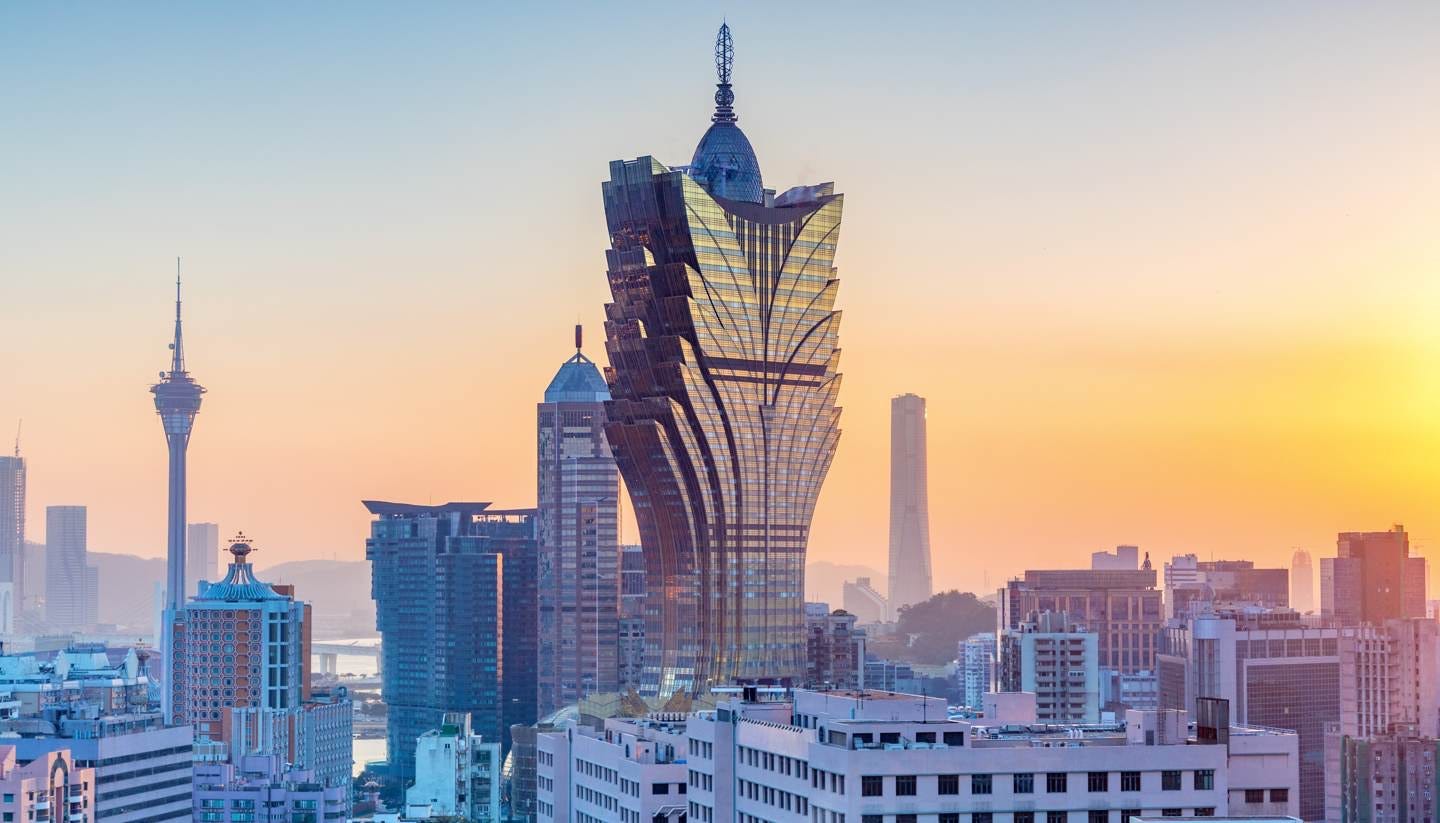
The quasi-emerging market of Macau is heavily dependent on its diplomatic and economic ties with mainland China and other Portuguese-speaking countries, particularly Brazil. Located on the western side of China’s Pearl River Delta, Macau was established in 1557 by the Kingdom of Portugal as the first permanent European settlement in East Asia. In 1999, the Sino-Portuguese Joint Declaration confirmed Macau’s return to the People’s Republic of China as a Special Administrative Region (SAR) with a high degree of autonomy in economic matters. Within the first five years of its return, Macau’s Gross Domestic Product (GDP) per capita grew 157.46%. Subsequently, a series of casino concessions was implemented in Macau by the Chinese central government—from 2002 to 2008. These externally reliant initiatives have formed a distinctive economic dependence of Macau on Mainland China, despite its status as a separate customs territory. Macau’s economy was abruptly interrupted by the COVID-19 pandemic shock, which underscored its urgent need for economic diversification away from externally reliant sectors. By diversifying from a casino metropolis into a bilingual intermediary economy, Macau leverages its legal autonomy as an SAR to function as both an economic and cultural hub bridging trade and cooperation between China and Brazil.
Macau’s economy expanded exponentially after its return to China, yet it faced a serious monopoly from the casino industry. Between 1999 and 2024, Macau’s Gross Domestic Product (GDP) per capita increased by over 376.8%, rising from 15,309.8 dollars to 73,046.9 dollars. By 2019, Macau’s gaming revenues were six times higher than Las Vegas’s, as the world’s largest casino metropolitan. From 2002 to 2020, the casino industry dominated Macau’s economy, accounting for around 50.9% of its total gross value. The gaming sector not only accounted for 30.37% of Macau’s total employed population, but also attracted an influx of mainland Chinese labor, taking over more than 77.0% of the non-resident labor population. This locals’ tendency to stay in the gaming sector for high remuneration diminishes their motivation to pursue higher education, an essential driver of human capital. Moreover, Macau’s growing reliance on mainland Chinese labor further undermined the local employment rate, while complicating the rental prices, urban planning, and welfare within Macau’s refined land area of 30.3 km². This demonstrates the instability of Macau’s gaming industry, which is strongly dependent on external consumption and labor force, a trait of a quasi-emerging market.
The year 2020 marked a turning point for Macau’s economic diversification, emphasizing its Lusophone connections. Although Macau’s annual real GDP contracted by over 53% from 84.78 billion to 39.22 billion, 2020 was the first time in 18 years that other sectors – namely the public administration, education, health, and other services—accounted nearly equally as the gaming industry’s (21.2% vs. 21.3%). In 2024, the Fifth government of Macau renewed its economic development plan with the “4+1” strategy to diversify its industrial structure. While continuing to develop the integrated tourism and leisure industry as the “1,” Macau seeks to facilitate “4” other major industries – including traditional Chinese medicine (TCM), financial services, high technology, and convention, exhibition, trade, culture, and sports. To take advantage of its geographical proximity and post-colonial ties, Macau strives to expand within the Great Bay Area in China, while strengthening market partnerships with Portuguese-speaking countries with the advantages of “certain legal familiarities”.
Brazil, as the largest of the Portuguese-speaking countries, has become one of the most active economic partners with mainland China. As two BRICS member states, China and Brazil have shared numerous initiatives ranging from agribusiness and renewable energy to education. In 2024, Brazil received $4.18 billion of Chinese investment, a 113% growth compared to 2023. The total number of confirmed Sino-Brazilian projects also reached a historical high of 39.
These collaborative developments serve as a reflection of Macau’s intermediary role in facilitating Sino-Brazilian economic partnership, after its expansive launch of the “4+1” strategy. In addition, at the 6th Ministerial Conference held by Forum Macao, all member states —including Brazil, China, Angola, Cabo Verde, Mozambique, and others—endorsed a new strategic plan to promote economic and trade cooperation from 2024 to 2027. A significant measure includes China’s commitment to building financial services platforms in the Guangdong-Macau Deep Cooperation Zone in Hengqin, further developing the international bond markets denominated in RMB and MOP to expand offshore liquidity pools. This would benefit Brazil by lowering transaction costs in its investment in China, while promoting de-dollarization for RMB globalization. More importantly, in May 2025, the People’s Bank of China and the Banco Central do Brasil renewed their RMB190 billion/BRL157 billion local currency swap agreement, valid for the next five years. This exemplifies the two countries’ effort to promote local currencies in bilateral exchange, reducing reliance on the hegemonic USD-denominated system. The past year’s economic development between China and Brazil is unprecedented, and Macau’s diversification plan has effectively catalyzed China’s Belt and Road Initiative to advance connectivity with Brazil.
The Sino-Brazilian trade and investment pattern reflects their cooperative and financial priorities. In 2024, Brazil’s electricity sector accounted for the largest portion—34%—of Chinese outward direct investment, followed by the oil segment and automobile manufacturing. Between 2020 and 2024, Brazil’s exports to China grew by 39.23%, with top export goods in agriculture (soybeans and other oilseeds), mineral ores (iron ore), and energy commodities (fuels and oils). Over the same period, China’s exports to Brazil increased by 106%, primarily comprising consumer electronics, machinery and industrial equipment, automobiles and vehicles. Therefore, Brazil predominantly provides raw materials to China while receiving manufactured and technology-intensive goods in return. This recurrent structure reinforces Brazil’s long-term dependence on Chinese technology and other relevant industries.
Although Macau and Brazil have established positive economic partnerships with mainland China, a shared risk is their heavy reliance on consumption and foreign investment from China. While both economies must pay close attention to industrial diversification, Macau’s unique political subordination to China as a SAR is a double-edged sword—one that both fosters and constrains its economic development. To be specific, the Chinese central government’s policies have significantly shaped Macau’s industrial and economic trends during socioeconomic and political crises – including the 2008 Global Recession, the 2015 Anti-Corruption Campaign, and the 2020 Zero-Covid policy. For instance, the release of the Individual Visit Scheme (IVS) in 2003 loosened travel restrictions for mainland Chinese visitors to Macau, which significantly boosted its tourism and gaming industries. However, between 2014 and 2016, China’s anti-corruption campaigns toward local officials drastically reduced their gaming consumption in Macau, which decreased its GDP per capita from $88,310.8 to $69,074, or about 21.8%. This indicates that Macau’s historical reliance on mainland Chinese policies and consumers remains particularly difficult to erase. As mentioned, despite the pandemic highlighting an opportunity for Macau to diversify, the process is extremely hard because of its overly-populated employment in the casinos, which restrains higher education enrollments and, subsequently, technological advancements. To prevent negative effects, Macau should expand high technology and financial services, while mindfully increasing its local educational priorities by advancing research infrastructures like Hong Kong’s; similarly, Brazil should accelerate the local development of the renewable energy and fintech sectors to attract more non-Chinese foreign investors. For investors, 2025 represents a pivotal year for deepening Sino-Brazilian economic growth through Macau. Beyond the traditionally dominant raw-material and gaming sectors, emerging industries such as fintech, TCM, energy, exhibitions, and technology present promising avenues.

Isabella Fang (BC ‘28) is a sophomore studying Political Science and Economics with a minor in Portuguese. She is interested in the intersection between law, economics, and culture, particularly in relations between China and the Lusophone world.