



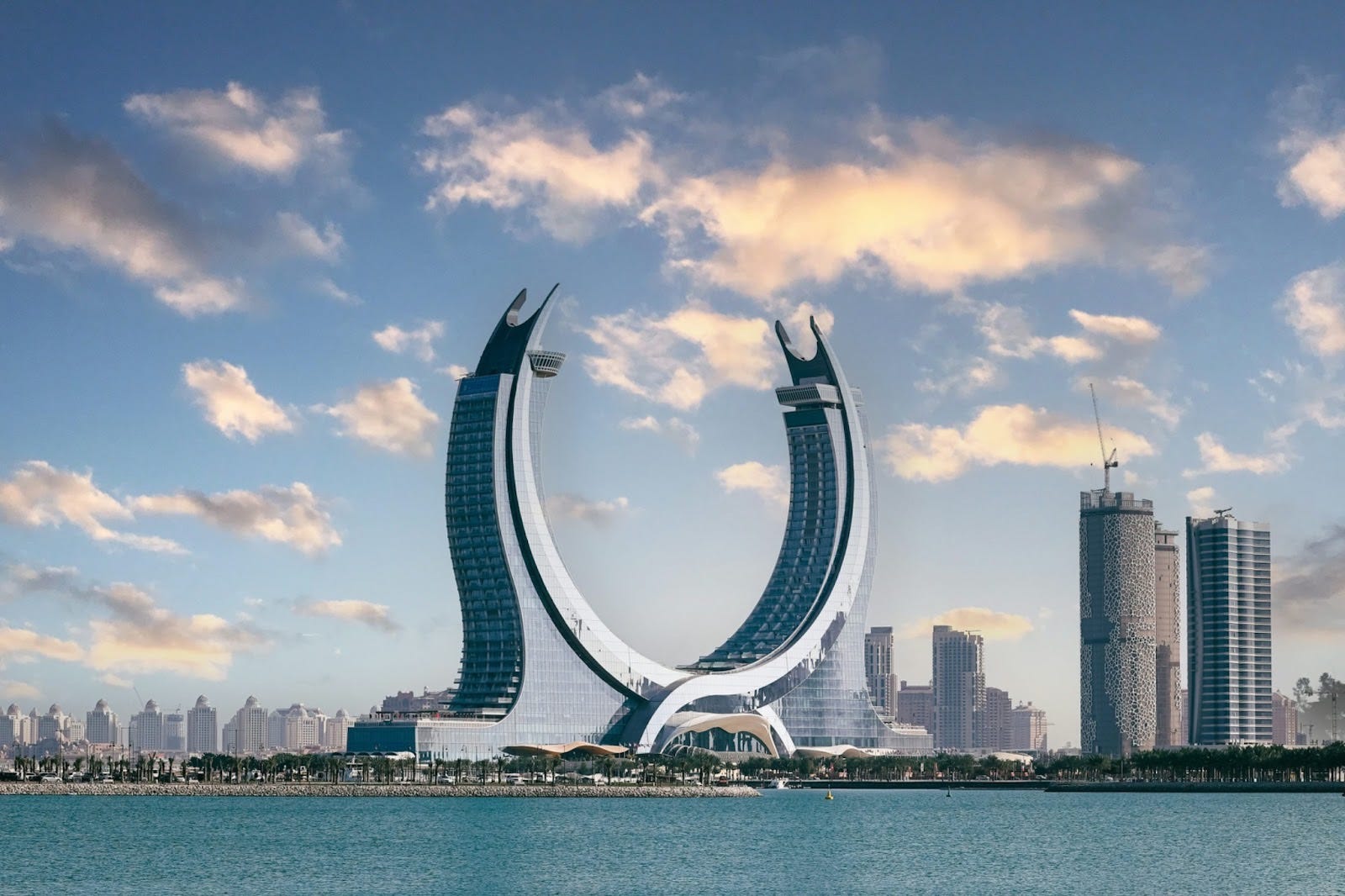
As nations increasingly project power through capital rather than conventional diplomacy, Gulf sovereign wealth funds have become agents of statecraft, calibrating their purchasing decisions to achieve geopolitical visibility. The Qatar Investment Authority and Saudi Arabia’s Public Investment Fund are especially well known for their luxury hotels, skyline-defining towers, and strategic urban districts. Portfolio diversification goals and Gulf political competition have accelerated the hunt for trophy assets, properties whose symbolic weight, not merely their financial returns, make them strategic levers of international influence.
The Qatar Investment Authority’s (QIA) London portfolio demonstrates how real estate has become a transformative tool of geopolitical influence. With a fund size of US$475–526 billion, QIA is one of the world’s largest sovereign wealth funds (SWFs). In the last 15 years, the fund acquired a wide array of iconic British assets including Harrods, The Shard, Claridge’s, and large parts of Canary Wharf, in addition to extensive residential holdings in Mayfair and Belgravia. These purchases operate as cultural and diplomatic infrastructure; Claridge’s and The Connaught, for example, often serve as informal diplomatic venues, hosting dignitaries and cultivating soft alliances through hospitality. Through its real estate arm, Qatar Diar, the QIA redeveloped London’s Olympic Village, further reshaping London’s urban ecosystem and explaining QIA’s control over thousands of residential units. In short, QIA’s London presence highlights that owning symbolic assets extends Qatar’s visibility and influence into one of the world’s most powerful cities.
Saudi Arabia’s Public Investment Fund (PIF) also uses real estate to build soft power, but through a strategy centered on national transformation and future-oriented branding. With US$1.15 trillion in 2025 AUM and a mandate to reach US$2 trillion by 2030, PIF is now one of the world’s most powerful SWFs. Its investments in Manhattan real estate, cross-border infrastructure, technology, and sustainability-linked mega-projects support Saudi Arabia’s bid to reposition itself as a global innovation hub. The centerpiece of this strategy is NEOM, a US$500 billion smart city marketed as a symbol of Saudi modernization and environmental ambition. NEOM’s financing mix, including joint ventures and UN SDG-aligned mechanisms, reframes Saudi Arabia’s global posture from hard-power energy dominance to reputation-driven, innovation-oriented soft power. Through its technologically advanced and globally diverse portfolio, Saudi Arabia uses real estate to broadcast a new national narrative anchored in modernity.
These moves by QIA and PIF are unfolding within a broader surge in SWF real estate spending, a level of concentrated investment that is shaping market behavior. A prime example of this effect is London’s residential prices, which rose 3.5 percent YoY in Q2 2025, with the highest valuations clustered around QIA-linked districts. These market effects matter: when sovereign funds anchor pricing and development patterns, they indirectly shape cultural landscapes, investor expectations, and the international visibility of the states behind them, extending soft power through the mechanics of global real estate.
Despite the soft power influence that these portfolios exude, some claim that SWF trophy asset purchases are driven purely by profit motives. However, the consistency of asset selection, the diplomatic signaling surrounding acquisitions, and the national branding embedded in these deals challenge this view. Harrods and Claridge’s become elite convening spaces; The Shard operates as a symbolic stake in London’s skyline; NEOM serves as a global rebranding project. These are not merely profitable properties, they are stages on which nations perform power.
As sovereign wealth assets are projected to reach US$18 trillion by 2030, with Gulf funds holding roughly 40% of that wealth, the real estate choices of QIA and PIF will shape urban development, international alliances, and the future geography of influence. The contest between Gulf sovereign wealth strategies is now written into the skylines of the world, where skyscrapers double as instruments of diplomacy and markers of the emerging global order.

Khizar Bhatti is a real estate private equity and strategy professional with a growing focus on AI and emerging tech. He is currently completing his graduate studies at Columbia University, where he applies data-driven thinking to investment analysis and innovation.