


“What we owe to each other” is a question oft debated. Even in the world of firms and economies, it rings true, especially in the context of developed versus developing countries. When trying to implement sustainability initiatives, who does it fall on?
This debate over sustainability rests on the premise that developing economies tend to produce more pollution, and developed ones less. However—as these emerging actors argue—they are playing catch-up with established states, who didn’t need to comply with such regulations when they were developing. Moreover, the supply chain positioning has these countries contributing to manufacturing of pollutant-heavy products, but not being treated as a final destination, thus reaping unequal consequences. As a result, they claim it’s inequitable and unfair to not be offered the same opportunities to grow.
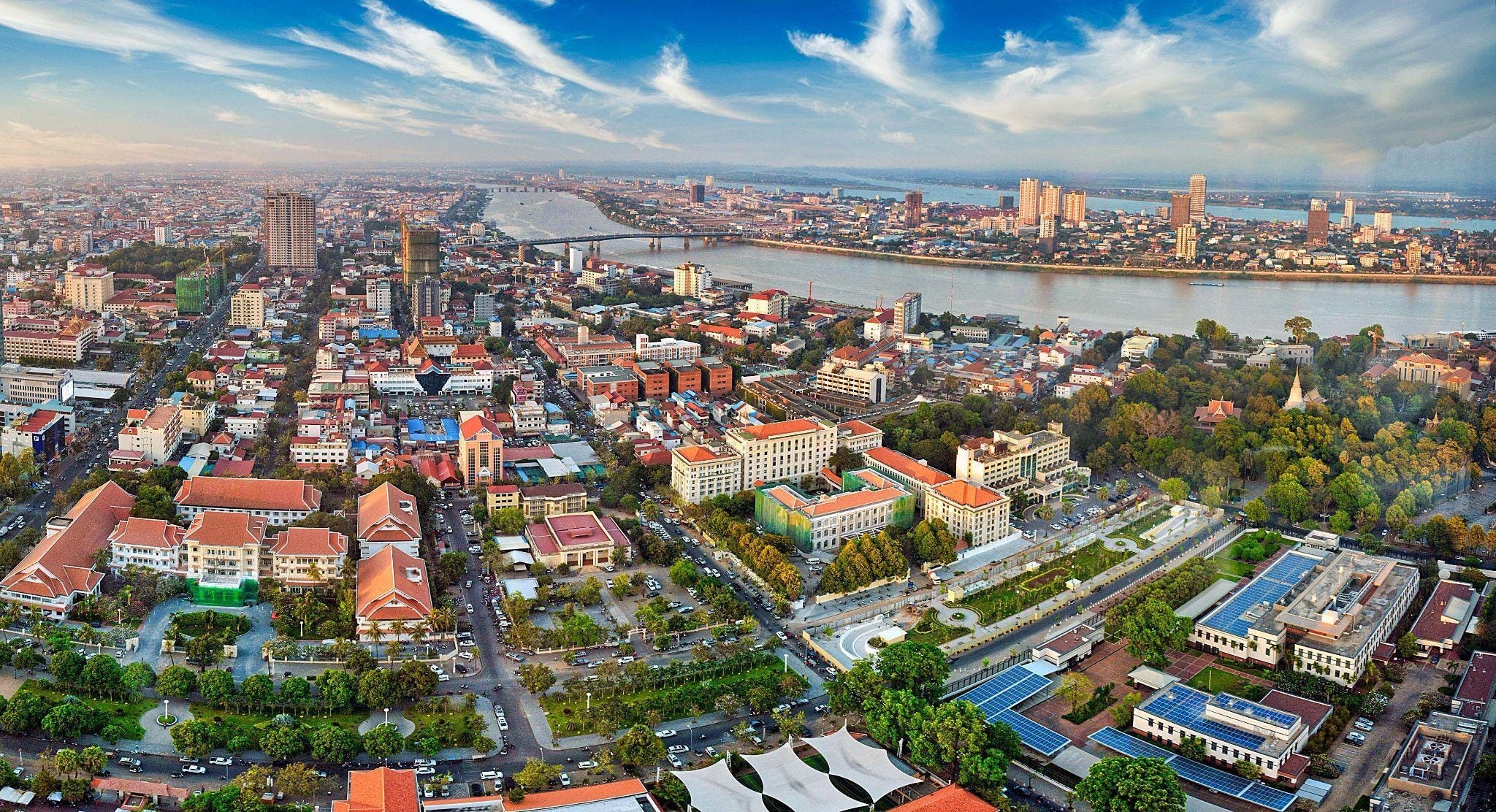
Cambodia is one such nation debating this issue, and has recently started focusing on implementing some of these Environmental, Social, and Governance (ESG) frameworks. A nation rich in natural resources and biodiversity, this is a particularly important avenue to consider while in the process of emergence. Despite its initiative, however, it is still necessary for developed countries—particularly through institutions such as the United Nations and the European Union—to take a genuine and long-lasting interest in providing assistance to Cambodia in its green development by offering not just monetary support, but also policy structuring advice.
A Devastating Legacy
Developing countries often have a multitude of budgetary issues to consider; not solely those of economic growth. Fighting homelessness, improving accessibility, and providing transportation are just a few of the steps such nations have to take. This is especially exacerbated in Cambodia from the aftermath of the Khmer Rouge regime, causing a genocide that destroyed the lives of citizens, as well as the country and its economy after high mortality rates rattled the education system. The regime had even abolished money overall; the country’s currency, the Cambodian Riel, was only introduced in 1980.
Meanwhile, developed countries have a historical track record of providing aid to foreign countries. Perhaps it’s toppling an allegedly totalitarian regime or subsidizing a seaport’s construction; intervention can be observed across the globe. However, this did not occur during the genocide, with nations reluctant to interfere after observing the region post-Vietnam.
Relations nowadays have much improved, with the U.S. subsidizing the country’s growth towards meeting sustainable development goals and furthering its health sector. The European Union also maintains a long-standing partnership with the country, with €285 million dedicated to its growth from 2021-2027.
We can already observe that Cambodia is a willing participant in remodeling towards ESG principles, as such investment “benefits our long-term competitiveness and economic resilience,” said deputy prime minister Sok Chenda Sophea. The nation wants to embed ESG frameworks in its governance, enabling actions to actually receive follow-through. However, such embedding requires a complicated legal and regulatory framework. For a nation attempting to rebuild as a whole, this will be a difficult task.
The Importance of ESG
An important obstacle seen across international politics is the collective action problem and the issue of countries free-riding. This occurs when something beneficial for one country is also beneficial for another, and thus neither nation wants to take the first step. With climate change, this issue is especially prevalent. But tackling climate change is costly, and economically restrictive in the short-run; most politicians who need to consider short-term performance do not endorse such heavy-handed reform, no matter how beneficial in the long-term.
In Cambodia, climate change is particularly devastating as it is an agriculture-heavy economy with many living in significant poverty. These typhoons, floods, and droughts create food and export inconsistency; the country ranked 12th in most vulnerable to climate change in 2024. Despite lower per-capita emissions relative to advanced economies, the Southeast Asian region (SEA) is unfairly reaping those consequences. The caveat: the region is increasing such emissions at a faster rate than elsewhere in their strive towards economic development.
On a more personal level, climate change is detrimental as health costs rise, species go extinct, and weather events become more extreme. These once-in-a-thousand-years events seem to be happening every other year.
A Path Forward
Effective policy-making is a key cornerstone in attacking climate change: even if money is earmarked, not having a detailed plan explaining where such money is directed means it will fail. This includes meaningfully considering different scenarios—known as scenario analysis—as the dynamic nature of the climate leads to uncertainty and a constantly fluctuating policy atmosphere. Developed countries tend to be more adept at such scenario analysis since they possess superior data, financial resources, and technical expertise.
As a result, while Cambodia has already developed a detailed climate mandate, it can be difficult to put words into action. Through assistance from other global institutions, who already have some effective policy measures in place, Cambodia may be able to attain its goals.
Let’s take a look at effective policy measures in a country that, like Cambodia, is encouraging the growth of manufacturing through low-cost labor and technology transfer. Domestically, India has seen success from passing a Production-Linked Incentive scheme, which offers financial incentives to companies willing to manufacture goods in the country. This measure has been fairly successful, which can be attributed to its highly robust nature. Rather than carving it out as a broad subsidy, there are sectoral, time, and threshold restrictions. If Cambodia were to model its green mandate in this complex manner, it would benefit. But such complexity can be difficult to implement—Cambodia is a smaller nation with a much lower GDP—and for an issue as urgent as climate change, assistance is required.
Many other SEA economies receive climate finance assistance from developed countries. However, these programs often take the form of loans over grants, which can reduce the growth rate of these developing economies. As a result, current systems in place require a makeover, with more than just funding in mind.
A more rigorous expansion and evaluation of the UN Development Programme, which “[helps] people build better lives while protecting the planet,” would be effective. After all, increased collaboration with local governance has shown promise in revitalizing the country. Stricter collaboration is thus required, as only 35% of nations were on track to meet the Sustainable Development Goals outlined by the United Nations. With increased accountability and a reckoning on the program’s true intentions, Cambodia can continue its positive track record.
The largest obstacle, per usual, is financial constraints. Thus, while improvement of such programs would be desired, a more realistic plan would be a combination of stricter adherence and effective policy change enabling domestic drive towards these goals. The European Union’s (EU) Green Deal shows how this combination has succeeded from a tandem of comprehensive policy and explicit funding goals. To see such a plan moved to Cambodia, and perhaps later to the wider SEA region would benefit more than just those regions.
Feasibility in Question
In today’s political environment, such a lofty goal may feel difficult to imagine. Globally, nations have become more protectionist. Both China and Canada, two major U.S. trading partners, announced retaliatory tariffs once Trump’s first round was implemented. Unity grows more unlikely, too, as Trump pulls out of international pacts, including the Paris Agreement, which focuses on addressing climate change.
The applications for Cambodia can be extended for other nations once we see its implications. But the benefits of its success are distinct for Cambodia too: “our environment-focused campaigns are about more than cleanliness—they’re part of our national investment strategy,” says the head of the Ministry of the Environment. While the Western world sat back and watched the Khmer Rouge massacre its own citizens while isolating globally, they should take an active stake as the next battle lies ahead. Cambodia has already shown its willingness to take that next step forward and integrate with the global economy—developed states should join in.
This lack of unity is what makes installing a more unified system all the more necessary. When the League of Nations was first proposed, I’m sure many thought of its possibility of success as ludicrous. Once reformed into the United Nations, we’ve all reaped its benefits. The same can be true of one of its sub-projects, as soon as proper attention is devoted towards bettering the Development Programme; outside of the UN, through inter-state partnership, these developing countries, too, will no longer bear the cost of climate change alone.

Abbey Zhao (Columbia College ‘28) is a writer for the Columbia Emerging Markets Review studying economics and statistics with a minor in political science. She is interested in how policy interplays with innovation, and how that drives forth domestic and international economic growth.